Bootstrapping a portfolio of products to a 7-figure ARR
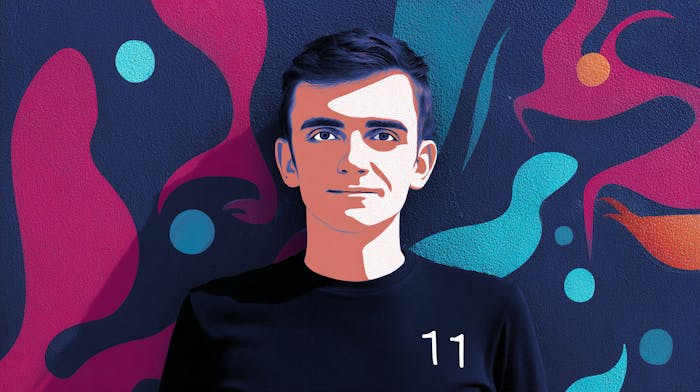
Andrian Valeanu started his indie hacking career with a blog side project back in 2010. A year later, he went full time.
Now, nearly 15 years later, he has a portfolio of six products bringing in a 7-figure ARR.
Here's Andrian on how he did it. 👇
Wearing lots of hats
I am an entrepreneur from the Republic of Moldova, now based in Barcelona.
The journey began in 2010 when I started Designmodo as a blog. In 2011, my side income matched my salary, so I went full time. Independence was a strong motivation. I wanted control of my time, I wanted my ideas to exist in real life, and I wanted the tools that made me better —if something slowed me down, I tried to build a faster way and share it with others.
These days, I bootstrap internet products, with no investors and no venture capital. Day to day, I run business operations, lead product R&D, prototype and ship features, jump into support when needed, and review SEO and content. I wear the founder hat and the builder hat.
I work across a focused ecosystem:
Designmodo: an email builder with Postcards, plus website building with Slides and Startup
Siter.io: freehand, no-code website builder
Static.app: one-click static site hosting
Pulsetic.com: uptime monitoring with website status badges, multi-channel alerts, public incidents, and scheduled maintenance pages
Unspam.email: email spam and deliverability testing
Absurd.design: a hand-drawn illustration project where I am part of the team
My focus is simple: Help people create and run things online with less friction.

Create a Free Account
To read the rest of this article, you'll need to subscribe to Indie Hackers.
The best part is: subscribing is free!
Indie Hacker members get expanded access to more of our content, including articles and our database of ideas.
You'll also get access to the community, including the ability to talk to other indie hackers and create a profile for yourself.

Leave a Comment
Building a portfolio of products is an interesting strategy because it spreads risk while creating multiple opportunities for growth.
Not every product needs to become a breakout success. A diversified approach allows founders to learn from different markets, allocate resources based on performance, and compound growth over time. It's a disciplined way to build resilience into a business.
Really appreciate you sharing this. A few things hit home:
1. The 2015-2017 WordPress expansion that nearly broke the company - over-hiring, long build cycles, support spike. That's exactly the trap I'm trying to avoid by selling my booking SaaS code rather than running it myself.
2. "Let behavior guide decisions" and "data—not excitement—drive scope" - solid advice I need to remember.
3. Your revenue path: free model → validate → add paid tier. I'm at the code stage wondering if I should get some free users first before selling, or just sell the code now and move on.
Quick question: If you were in my position with a completed booking SaaS but no customers yet, would you spend 2-3 months getting initial traction before selling, or sell the code now and start fresh on something else?
Thanks for the transparency on the tough years. Posts like this are rare and valuable.
Thank you! I needed to read something like this. Although I’m not very savvy in your vertical, it is good wisdom and steps for anyone working on an indie startup.
I love that you jumped into crowded, or even “saturated” market and finding the pain point, fixing it and elbowing your way to a chair at the table (so to speak). I liked reading that not only can it be done, but it can be done bootstrapping and successfully.
This is a great post, sometime when working on your own product, venture you need to hear things like this for that extra motivation, thank you!
I’m glad I found this site!
Something that stands out to me in your startup portfolio is that you seem to enjoy tackling big problems in markets crowded with major competitors.
Personally I find that quite fascinating because, for example, I honestly can’t wrap my head around how someone could successfully market a website builder today. Personally, I rely a lot on SEO, and it feels overwhelming — so much content to produce, endless backlinks to secure, and the constant challenge of outperforming thousands of existing players.
The downside of this mindset is that I end up restricting myself to small projects with very limited revenue potential.
I’d love to hear your perspective on how others could approach this kind of challenge — especially for people like me who have limited time and resources to invest in projects.
That’s a great observation, and I can relate to how overwhelming crowded markets can feel. What helped me was shifting my perspective from competing with everyone to serving a specific audience better than most.
For example, with Siter.io, I didn’t try to build “another website builder” for everyone. Instead, I focused on a narrower use case: freehand, no-code design for people who wanted speed and simplicity. By narrowing the problem, the market becomes less intimidating and the SEO/content strategy becomes more focused too.
With limited time and resources, I’d suggest starting small:
Define a clear, narrow problem where the competition feels less overwhelming.
Create the smallest useful version of a solution and ship it.
Use your content not to “outproduce” everyone, but to teach something specific and practical that your exact audience cares about.
Big markets look scary when viewed as a whole, but there are always underserved corners where small projects can thrive.
Impressive work building and managing multiple products, really inspiring. If you had to pick just one, what was the single most effective distribution channel that got your very first traction?
i am really inspired
Thank you, I really appreciate that. For my very first traction, the most effective channel was publishing useful content and sharing it on Social Media and Newsletter and through "Google Search". Writing tutorials, examples, and freebies helped people discover my work naturally, and from there I built relationships and trust.
It wasn’t about chasing a huge audience, it was about being consistent with creating value. That consistency was what turned into early traction.
The 2015-2017 WordPress challenge resonates deeply - it's fascinating how success can actually create blindspots that lead you outside your core strengths. Your recovery playbook is gold: return to strengths, switch to subscriptions, lean structure + profit sharing.
The 'treat support as product research' principle is undervalued. I'm curious about your portfolio prioritization - with 6 products, how do you decide which gets the next feature sprint? Is it purely retention-driven, or do you have other decision frameworks for resource allocation across the ecosystem?
Growth can be just as risky as stagnation if it pulls you away from your core. That lesson shaped how I run things today.
On prioritization: retention and usage data are definitely strong signals, but I don’t treat them as the only input. I balance three factors:
Customer signals: support tickets, feedback, and direct requests. These often surface friction or opportunities we didn’t see from metrics alone.
Ecosystem impact: since the products are connected, a feature in one tool can make another more valuable. For example, improving Postcards strengthens email workflows across other apps.
Focus and bandwidth: each quarter I set clear goals with simple KPIs, and we consciously say “no” more often than “yes.” This prevents spreading thin.
So the framework is part retention-driven, part customer-driven, and part ecosystem-driven. The goal is to keep momentum steady while ensuring we’re solving meaningful problems in the right order.
Bootstrapping a portfolio of products to a 7-figure ARR requires smart scaling, lean strategies, customer-first focus, consistent innovation, and disciplined execution for sustainable growth without external funding.
Exactly, that’s been the formula: stay lean, listen to customers, and keep shipping. Bootstrapping forces discipline, but it also keeps the freedom to build long term.
"Default to no code for users, reduce time to value." The second part I get, but unless the product is dev-focused, don't most products default to no code?
Also, surprising to see Product Hunt recommended in 2025. My negative experiences there led me back to Indie Hackers, in search of proper community.
Good point! What I meant is we try to strip away complexity so users can get value without needing to touch code. Even small technical barriers can slow people down.
Totally hear you on Product Hunt. It’s not the same for everyone, for us it worked in the early days for visibility, but Indie Hackers has been much better for real conversations.
Strong principles + steady practice. Curious: what’s the one KPI that most often kills a feature or project for you (activation, retention, or time-to-first-value)? And when did you know education/SEO had compounded enough to lean into pricing and lifecycle emails?
Retention is usually the killer, if people don’t come back, nothing else matters. For SEO/education, we leaned in once we saw steady organic traffic converting into signups month after month. That’s when pricing and lifecycle emails started to really pay off.
Got it. Treat retention as the hard gate; when organic signups are consistent, pricing and lifecycle finally compound. That’s the takeaway I needed.
Andrian's story is one of the longest arcs on IH — 15 years bootstrapped from a blog to a 7-figure portfolio with no outside capital. The 2011 decision point (side income matched salary, went full-time) is the kind of clean, rational trigger that sounds simple but requires a lot of patience and tolerance for uncertainty to actually reach.
What's striking about the six-product ecosystem is how cohesive it is around a single thesis: help people create and run things online with less friction. Designmodo handles email and website building. Siter.io and Static.app handle no-code and hosting. Pulsetic handles monitoring. Unspam handles deliverability. Absurd.design handles illustrations. None of these are random bets — they all serve the same type of person (small teams, creators, indie builders) who want to ship faster without needing a technical co-founder. That thematic tightness is what makes a portfolio sustainable versus scattered.
The product that catches my attention most is Pulsetic (uptime monitoring). It's a crowded category at the infrastructure level, but pairing uptime monitoring with public incident pages and scheduled maintenance announcements turns it into a customer communication tool, which is a meaningfully differentiated angle. That kind of insight — reframing what a product fundamentally is — usually comes from actually talking to users.
Running all six products while also handling support, SEO, and product R&D solo or near-solo is the part of the story that gets glossed over. The operational discipline to avoid spreading each product too thin while keeping all of them alive is not obvious, and most people who try a similar model either let some products die or burn out managing all of them.
Genuinely impressive. Building RovaAI and always following founders who've compounded their way to 7-figures over a long horizon rather than sprinting there.
HOW I RECOVERED MY LOST CRYPTO FROM FAKE BROKER ONLINE.
I had lost over $752,000 by someone I met online on a fake investment project. After the loss, I had a long research on how to recover the lost funds. I came across a lot of Testimonies about THE HACKANGEL RECOVERY TEAMS. I contacted them providing the necessary information and it took the experts about 48 hours to locate and help recover my stolen money. If anyone is looking for a Recovery firm to Recover your lost Crypto. You can contact THE HACKANGEL RECOVERY TEAMS . I hope this helps as many out there who are victims and have lost to these fake online investment scammers. You can contact them by using Email OR Phone
WhatsApp +1(520)200-2320
Nice product! Have you thought about using a short SaaS video on your homepage to show how it works?
Personally I find that quite fascinating because, for example, I honestly can’t wrap my head around how someone could successfully market a website builder today. Personally, I rely a lot on SEO, and it feels overwhelming — so much content to produce, endless backlinks to secure, and the constant challenge of outperforming thousands of existing players.
The downside of this mindset is that I end up restricting myself to small projects with very limited revenue potential.
Really inspiring journey! I appreciate how transparent you’ve been about both the wins and the tough years. The emphasis on staying lean, focusing on customer value, and building slow but steady growth really stands out. The “treat support as product research” mindset is gold something I’ll definitely apply in my own projects. Thanks for sharing such a grounded and motivating story!
I feel like I must pivot every day)) Not because I want to, but because the pressure is always there. Balancing when to stick it out versus when to change direction is the hardest part.
pretty good
That's inspiring! I am also trying to build something cool. Let's see :)
How long and how many people did it to take to reach $20K MRR, and how hard was it?
Was the remaining revenue growth just as hard, easier, or roughly the same difficulty to achieve?
At what MRR did you decide to grow your team, and why?
Really cool, I love how you launched by going free version first before any other kind of marketing or monetization. I think that's the trickiest part, since im building something (much simpler with PHP + VPS + Python). I already have the free version up. Great value
Impressive work
Really enjoyed this, Andrian. 15 years of steady compounding across Designmodo, Siter, Static, Pulsetic, Unspam, Absurd is a great case for “teach first, ship small, and let PLG + SEO do the lifting.” The WP detour → hard reset → lean relaunch lesson is gold, and the “first win in minutes” principle shows up across the portfolio.
Curious on two fronts:
In week one, what single signal best predicts a paying subscriber; first useful template shipped, monitors added, or an email built and sent?
Of your channels (education, search, community), which one consistently drives the highest-intent trials today vs. just traffic?
P.S. I’m with Buzz; we build conversion-focused Webflow sites and pragmatic SEO for product launches. Happy to share a tight 10-point GTM checklist if useful.
wow
Impressive work building and managing multiple products, really inspiring. If you had to pick just one, what was the single most effective distribution channel that got your very first traction?
Great
Successful Recovery of Stolen Bitcoin Funds-APEX INTERVENTION LTD
I experienced a devastating loss when my entire life savings — approximately $213,811 in Bitcoin (BTC) — were stolen in a cryptocurrency scam. Initially, I was informed by several sources that recovery was impossible, and I had nearly given up hope.
Fortunately, I came across an article referencing APEX INTERVENTION LTD, a reputable recovery specialist known for assisting victims of scams and fraudulent transactions. Despite my initial skepticism, I decided to reach out and engage their services.
To my astonishment, they successfully recovered the full amount that had been taken from me. I am sharing this information in the hope that it may assist others who have experienced similar financial losses.