I built a simple safety audit tool for oil & gas contractors, then realized my main competitor is… Excel 📊
When I started building BasinCheck, I thought I was competing with the big EHS platforms. Turns out, most small-to-midsize contractors in the Permian Basin are still running safety audits in Excel spreadsheets, paper binders, and Word docs.
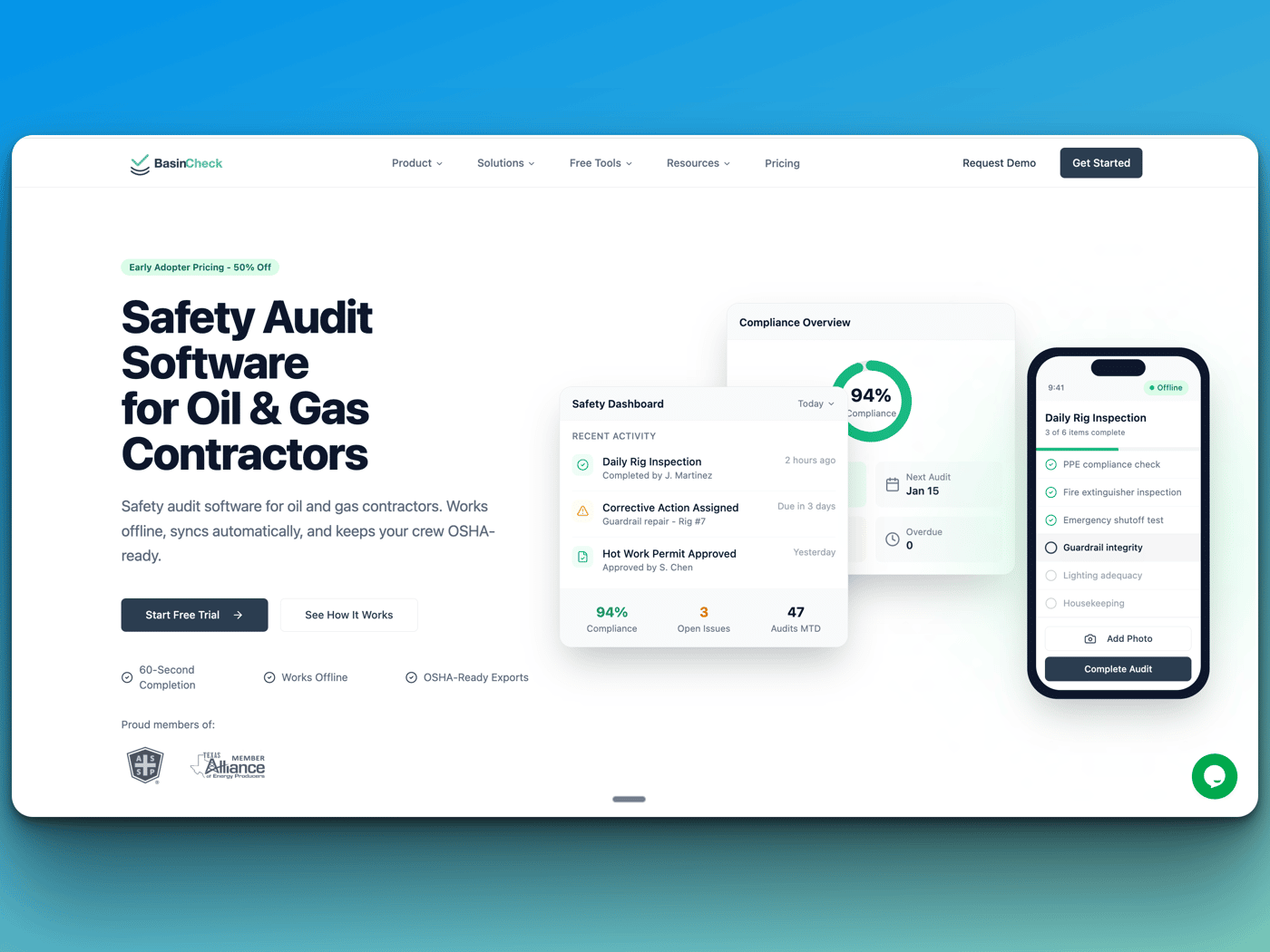
The "enterprise EHS suite" landscape
There are legitimately great tools out there:
SafetyCulture - Excellent inspection/checklist platform, but paid plans scale per seat/user
KPA Flex - Strong compliance + training suite, typically quote-based pricing
VelocityEHS - Enterprise-grade EHS management across many industries
Cority - Unified platform for larger orgs; pricing often varies by modules/employees
Benchmark Gensuite - Comprehensive EHS suite, common in enterprise manufacturing/energy
GoAudits - Mobile inspection app with per-user pricing on paid tiers
DoneSafe - WHS/EHS platform sold in annual packages
Field Eagle - Field service + compliance tool
Most of these are multi-industry platforms (hospitality, manufacturing, construction, retail) and they're built for bigger teams with dedicated safety departments, IT, and implementation budgets.
Therefore, I built a quick ROI calculator to compare per-seat vs. flat-rate pricing at different crew sizes.
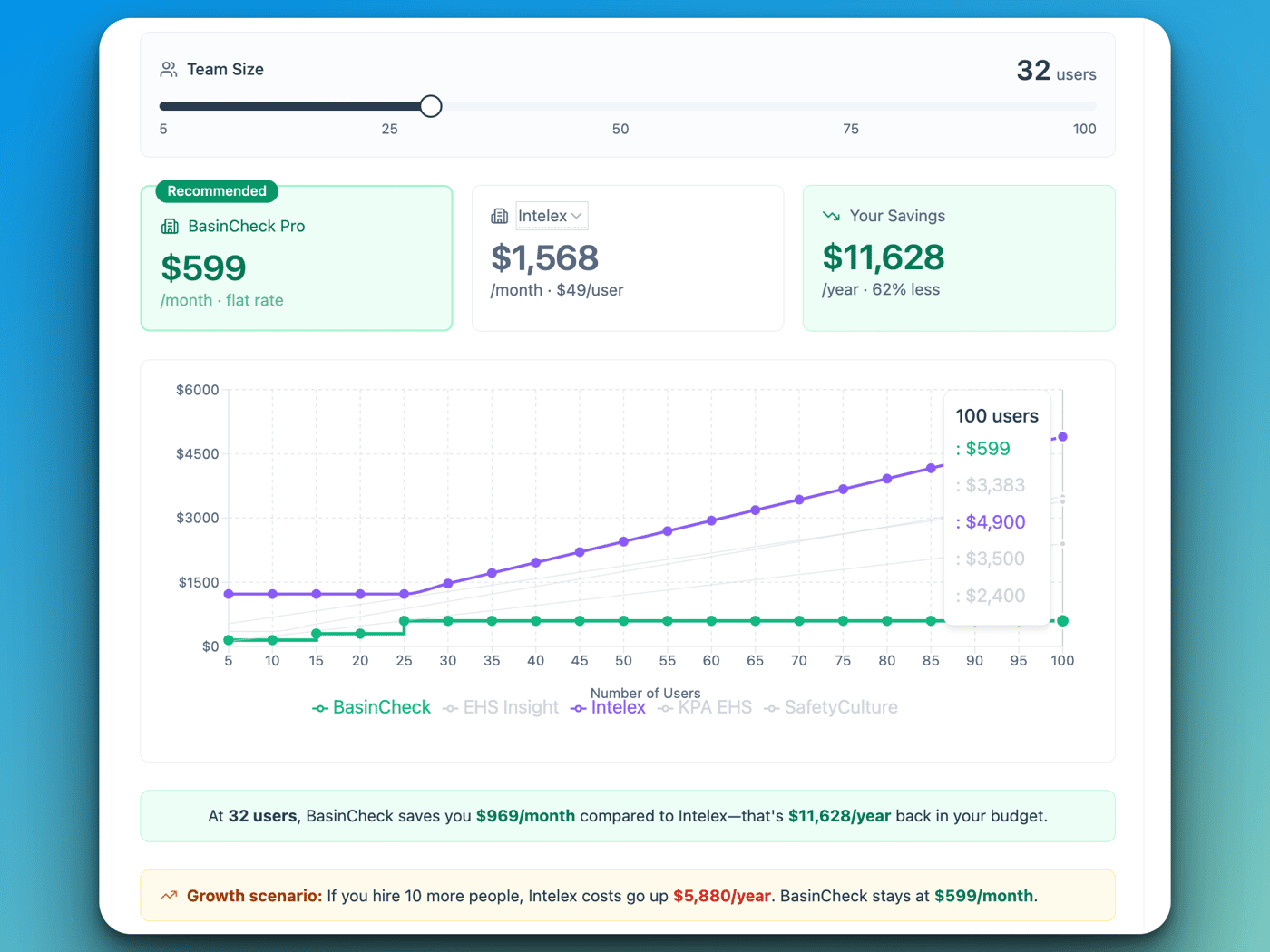
It addresses the most important aspect of software pricing in the EHS space:
"Will using more of that tool will cost me more and how does it scale?"
I talked with multiple oil and gas operators in the Permian Basin and was told that crew head counts fluctuate from month to month. So, charging per seat is a sure way to cause HSE's and Safety Managers a massive headache.
The BasinCheck wedge
I built BasinCheck with three constraints:
Flat-rate pricing, unlimited users - Your crew size shouldn't dictate your software bill
Audit-ready from day one - Timestamped records, follow-up tracking, export-ready reports
No implementation bloat - You can onboard in minutes, not months
We just landed our first pilot customer (6-month custom rollout) and got our first Stripe notification last week.
The real trigger wasn't just "going digital" - it was defensibility. One of our early users summed it up:
"I just want to know whether [Crew Lead] in West Texas is actually performing his daily forklift checks - without me having to be at the site."
You can't get that real-time verification from a binder in a truck.
More importantly, I wanted to give SMBs the same "armor" the big guys have. When OSHA shows up, it shouldn't be a "Code Red" where everyone runs to the truck to frantically dig through coffee-stained binders. It should be a non-event: you click "Export OSHA Records," hand over the PDF, and you're done.
My question for this community
For those who've built in "unsexy" verticals where the incumbent is a spreadsheet:
How did you frame the switch cost vs. the risk cost?
Did you lead with a free checklist/template to prove value first, or did you go straight to demo?
What's worked better: async onboarding (loom + docs) or live walkthrough calls?
I'm at the "$1k → $10k MRR" milestone and now trying to figure out how to scale acquisition without burning through my runway on unqualified leads.
If you're running safety operations in oil & gas (or adjacent industries), try the ROI calculator or DM me for our audit checklist + what we've learned so far.

