Growing an open-source product to $1.3M ARR in two
years
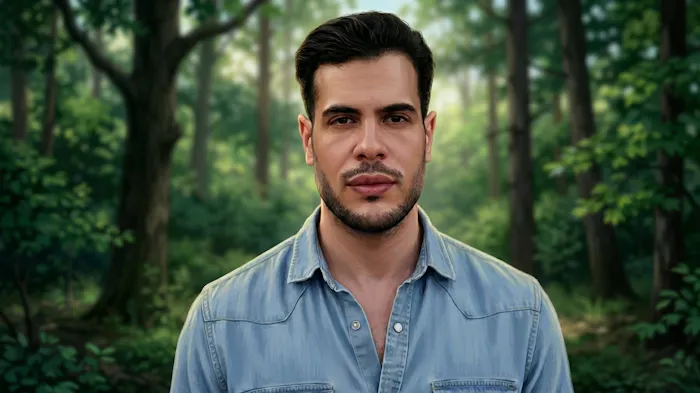
After many failed startups, Nevo David built an open-source product called Postiz and grew it to $1.3M ARR in two years.
Here's Nevo on how he did it. 👇
The journey to a successful product
I was a full-stack engineer and team leader for almost seven years at various Israeli startups.
Then, I had nonstop failing startups that left me with a big negative balance in my bank account. In 2022, I realized I had no money, so I started working at an open-source startup called Novu, this time as a growth marketer and not a developer. I wanted to understand more about marketing.
I brought them to 30,000 GitHub stars in two years and a lot of sales. I understood the power of open source. I started a consulting business, charging a high ticket of $3,000-$4,000 per month for two meetings a week, and at the same time, working on Gitroom.
Gitroom was a SaaS to help you prepare your open-source launch. I spent almost six months there until I understood the market was just too small. So I pivoted to my current startup, Postiz, and grew it in the last two years to $113k MRR.
Postiz allows you to schedule posts to 30+ social media platforms (the biggest in the market) and is leaning towards agentic use (e.g., OpenClaw, Hermes, Claude, etc.). And we've been open source from day one.
Anything is possible
As far as my motivation, I wanted financial freedom. And I wanted to work for myself.
I was tired of making tons of money for the people I worked for. I felt like I was wasting my life.
And ever since I made my first $1 online many years ago, I've known that anything is possible.
Building the product
Extensive knowledge of OOP programming allowed me to build the system very generically, making it easier to add more social media providers.
This was before Claude/Codex, so I wrote most of the code by hand, with significant help from GitHub Copilot autocomplete.
The stack is NestJS, NextJS, Temporal, Postgres, Tailwind, React Native (For the app).
I always appreciated good design, so I worked with designers — it was expensive, but I used money from my consulting. I wanted to build a strong brand.

Open source with a cloud offering
We are fully open-source, and our cloud offering mirrors the open-source version.
Users can deploy everything for free forever if they use a $5/month Hetzner server and spend a few weeks getting their OAuth providers (Meta / TikTok / etc) approved. Otherwise, they can start with our cheapest plan of $29 per month.
We aim to be as close as possible to developers. This paid off when we focused on social media automation and agentic use, even though developers preferred an open-source solution.
Organic growth
Postiz secured a few subscriptions in the first week after its release. We were the first good open-source solution for social media scheduling, and we published every release on /r/selfhosted.
Everything in Postiz is organic (no ads).
We had 4 Product Hunt launches. We won every time by planning well, conducting extensive outreach, and publishing.
We frequently post on Reddit. On /r/selfhosted, we get 100k views every time.
We create N8N templates for users to automate tasks with Postiz.
We create skills for every available SKILLS marketplace, such as Claude Marketplace and GitHub's awesome lists.
We've been interviewed by multiple channels.
We publish many articles on X from different creators and promote them in collaboration with other creators.
Getting into GitHub's main trending feed to get more eyeballs.
We perform extensive SEO, write blog posts, and get backlinks.
Marketing differentiation
Our biggest challenge? Buffer and Hootsuite, the main competitors, dominate marketing.
I attracted open-source and technical users, and I offered many social media platforms for scheduling, but it was not enough. We reached $3-$6k MRR and plateaued for a long time without significant growth.
Then, we switched to automation, growing it from $6k to $12k in one month, and focused more on that area. When OpenClaw launched, we quickly adjusted our marketing and grew it from $21k MRR to $70k MRR in ~2 months.
Finding our marketing differentiation took some time, but I'm happy with how it all worked out. Because focusing on social media scheduling created a better system architecture.
Marketing experiments
I read tons of books covering every aspect of marketing, from Traction to $1M offers.
These books helped me make better decisions and prompted me to try many marketing experiments.
If the experiment doesn't work, you learn. If it does, you double down.
Focus on branding
Spend more time on what you build.
With Vibe-coding today, it's very easy to start 10 projects in a week. But because coding is easy today, everything is around a brand.
The top 500 companies in the world get most of their sales today not from marketing but from word of mouth. When you have a brand, everything changes; it's easier for people to make a decision.
So don't build products non-stope. People who do that never manage to build a brand.
Plus, spreading your focus across multiple products isn't possible; you usually focus on the last one you did. And that means you're wasting your time again and again.
Diversification belongs to the stock exchange, not startups.
What's next?
We've already reached $1M ARR, so our goal is to reach $2M ARR.
I want to crack more channels. Right now, I know how to get tons of engagement and views on X and Reddit, and my 2026 goal is to improve at Shorts and Reels on video platforms.
If you'd like to follow along, my X profile has tons of articles with different tactics I've used.

Leave a Comment
Open-source as a distribution strategy is underrated. Most founders see it as "free labor" or a liability, but what Nevo did with Postiz illustrates the real play: the repo becomes a discovery channel, issues become a direct line to power users, and contributors become advocates before they're even customers.
The hard part is usually the transition from "people use our free version" to "people pay for the hosted version." Curious how that conversion looked in practice — was it mostly companies that didn't want to self-host, or was there another driver?
The pivot from Gitroom to Postiz is what stands out most here. Six months in and the willingness to admit the market was too small — that's harder than it sounds. Most founders stay too long trying to make something work that was never going to.
The OpenClaw timing jump from $21k to $70k MRR in two months is a good reminder that distribution is often about being ready when a wave hits, not just building the right thing.
How are you thinking about the brand vs product balance as you push toward $2M ARR? Curious if the open-source layer still drives most of the top-of-funnel or if that's shifted.
Congrate Man
You write that you posted multiple times on reddit. How did you keep a different angle every time, to avoid being repetitive / spammy?
Build less, distribute more. That’s the real lesson here.
Hello here how are you all doing and how was your day going
have anybody ever hear about dropshipping before
great post
Your zero-paid ads organic system is eye-opening: consistent Reddit selfhosted content, repeated Product Hunt launches, GitHub trending operation, SEO long-tail blogs, third-party workflow templates, and creator cross-collaboration. Open source only attracts technical traffic; layered, multi-channel organic operation turns traffic into paid cloud subscribers. Many open-source projects fail because they only rely on GitHub stars without structured distribution.
Hello
One chilly Friday morning, I found myself scrolling through TikTok when I stumbled upon a broker that seemed too good to be true. The scammers claimed they were offering pool investments for Bitcoin investors, allowing individuals to choose from various packages to invest. They provided videos of real trades and impressive profit-and-loss (PNL) screenshots, showcasing their success and enticing me to join in. Their polished presentations and persuasive tactics made it easy to believe that I was on the brink of significant earnings. Eager to replicate their success, I invested $96,300, convinced that I was making a smart financial decision; it didn’t take long for the reality to set in. I tried to reach the broker for updates, but communication slowed down. My messages went unanswered, and the once vibrant community I had joined became eerily silent. It soon dawned on me that I was dealing with a fake broker. The scammers vanished, taking my funds with them, leaving me feeling anxious, helpless, and utterly betrayed. I reached out to friends for advice. One of them recommended TechY Force Cyber Retrieval, a team specializing in recovering lost funds from scams. Skeptical but hopeful, I decided to give TechY Force Cyber Retrieval a try. That turned out to be the best decision I could have made. Their team acted swiftly, thoroughly investigating my situation. TechY Force Cyber Retrieval was professional, empathetic, and dedicated to helping me recover my money. Throughout the process, TechY Force Cyber Retrieval kept me informed, providing updates and reassurance when I needed it most. They meticulously analyzed the details of my case and employed effective strategies to track down my lost funds. TechY Force Cyber Retrieval not only helped me recover my lost $96,300 but also the promised profits that had initially lured me in. I was absolutely thrilled and incredibly relieved to see my funds returned. This taught me a valuable lesson about the importance of being cautious in the world of online bitcoin trading. I realized that while scams can happen to anyone, there is hope for recovery with the right support. If you’ve ever been scammed or are struggling to withdraw your investments from a broker, I highly recommend TechY Force Cyber Retrieval. They are experts in fund recovery and can assist you in regaining what you've lost. Their approach and dedication to client success are truly unparalleled. Don’t let a scam define your financial future; seek help from TechY Force Cyber Retrieval and take action. You deserve to reclaim your hard-earned money.
WhatsApp +.1.5.6.1.7.2.6.3.6.9.7
Telegram +.1.5.6.1.7.2.6.3.6.9.7
Hi, currently I am working on building my own line of products. Maybe I will reach this stage one day too.
Hello
what is excently are you working on
The most interesting part here is not the open source angle by itself, it is how he kept adjusting the positioning until the market started pulling harder. A lot of founders get attached to the first framing because it feels clean, but the real work is usually finding the thing people will actually repeat to each other.
The other lesson I took from this is that open source can be a moat only if the distribution is disciplined. Reddit, Product Hunt, SEO, creator collabs, templates, all of that adds up because it keeps the product visible in places where the target user already is. That is less glamorous than building features, but it is usually what turns a good tool into a real business.
Impressive journey! The biggest takeaway is that consistent execution, open-source community engagement, and strong branding can outperform paid marketing. Great insights for founders building sustainable SaaS businesses.
nice post
You are really amazing! I used to have similar thinking to you in my work process. However, I still have a lot to learn from you.
You never know James, however, thanks for posting this with us !
One thing that stood out to me is how long you stayed with the same product. A lot of founders would have started 10 new projects after hitting a plateau at $3k-$6k MRR. The part about finding the right positioning instead of rebuilding from scratch is probably the biggest lesson here.
seems good
Really inspiring journey, thanks for sharing so openly. 👏
The part that stuck with me the most: “Diversification belongs to the stock exchange, not startups.” That hits hard. I’ve been guilty of jumping between ideas too.
I’m also building a B2B SaaS – an AI interviewer for product managers and user researchers (InsightLoop). Seeing how you grew Postiz from $0 to $113k MRR with organic + open source + differentiation gives me a lot of hope.
Quick question: when you pivoted from Gitroom to Postiz, how did you decide “this is the right direction” vs just another small market? Would love to learn from your decision framework.
Congrats again on $1M ARR. That’s huge.
Growing an open-source product to $1.3M ARR in two years requires a strong community, consistent product improvements, and a sustainable monetization strategy such as premium features, support plans, or enterprise solutions.
Success often comes from building user trust through transparency, encouraging community contributions, and converting active users into paying customers by delivering clear business value.
Honestly this is really great! We are also trying to build towarda that goal, I wonder, in the age of AI, what do you do with the GTM, do you automate as much as possible? and if so, where do you leave the human in the loop?
It won because it found a distribution advantage.
A lot of founders see the "open source" part and think that's the secret. But reading the story, the real pattern seems to be relentless distribution: Reddit, Product Hunt, GitHub trending, SEO, creator partnerships, templates, marketplaces, interviews, and constant experimentation.
The other lesson is that growth accelerated when the positioning changed from "social media scheduler" to "automation platform." Same product foundation, different narrative.
In a world where AI makes building easier, distribution and branding seem to matter more than ever.
if you had to start Postiz from zero today, which growth channel would you focus on first?
The audit angle is great for building credibility. Did you notice if the AI-built apps had specific weak points (edge cases, polish, architecture) or were the issues more about product-market fit and UX? Asking because there's a lot of hype around "build with AI" but the differentiation seems less about the tooling and more about the founder's judgment on what to build.
Really inspiring story. The decision to stay open-source even under monetization pressure is what separates sustainable projects from short-lived ones.
Curious — at what ARR point did you feel confident enough to hire your first person?
fastest growing statrup by a solo founders I have followed on X
Really inspiring story. I liked the part about how growth only really started after you found the right marketing differentiation, not just after building more features.
what was the first clear signal that automation/agentic use was the direction you should focus on?
The Gitroom part hit me. Six months on a product before realizing the market was too small is a brutal lesson — and exactly the one most founders avoid because it feels like quitting.
I just walked through a version of this myself: 3 small products built in 2 months, 1 total sale, then forced myself to do real market research before touching code again. The hardest part wasn't pivoting — it was admitting that 'I built it well' doesn't matter if nobody is looking for it.
The "don't build products non-stop" line is going to stick. Cheap to start 10 things now, but it's still cheap to abandon them, and that's the trap.
אם אמת היא הטענה שבפיך — העמד אותה למבחן במקום שאין לה מחסה.
לא בחצר ביתך. לא בין אנשים שכבר נוטים להשיב לך. לא באור יקרותיו של השוק האמריקאי, אותו אור הגורם לכל רעיון להישמע כאילו כבר ראוי הוא לגיוס הון.
קח את אותו מוצר, אותו מחיר, אותה הבטחה — והעמד אותם בארץ שאין לך בה יתרון תרבותי, אין לך בה קהילה מוכנה, ואין לך בה היכרויות חמות הפותחות שערים מראש.
בלא ישראל.
בלא ארצות הברית.
בלא זוהרה של “אומת הסטארט־אפ”.
בלא הדרך הקצרה אל השוק האמריקאי.
רק המוצר.
רק הביקוש.
רק ההפצה.
רק התשלום.
כי עסק הפועל רק במסילה המגינה עליו — חצר ביתית, גישה לשוק האמריקאי, רשתות קיימות וסביבה טכנולוגית חזקה — אינו מוכיח אמת כללית. הוא רק מצייר את מפת תלותו.
עסק בריא אינו זקוק לזהות שתסביר אותו.
הוא זקוק לבעיה אמיתית, ללקוחות אמיתיים, לכסף אמיתי, ולשוק העומד על רגליו גם כאשר מסירים ממנו את יתרונותיו הנסתרים.
על כן הסר אותם. נקי.
בלי ישראל.
בלי ארצות הברית.
בלי הילה.
בלי קיצורי דרך.
אם יחזיק שם — יש בידך טענה.
אם לא — אין בידך אלא סיפור שסופר היטב.
This is an incredible achievement. Curious about how you balanced open source transparency with monetization strategies. Did you find that your community engagement changed as your product grew, and if so, how did you adapt your approach? Your insights could really help a lot of us navigating similar paths, and also what strategies did you follow when launching on Producthunt to be ranked high? thanks for sharing.
Really interesting how the biggest growth jump came from repositioning around automation rather than building an entirely new product.
Looking back, what was the signal that told you it was a positioning problem and not a product problem?
I think that's a question many founders struggle with when growth stalls.
The pivot from Gitroom stood out to me. A lot of founders keep pushing when the real issue is that the market is too small.
It's also interesting how learning marketing ended up being just as valuable as your engineering background. I've noticed a similar pattern while building Oversify. Distribution often matters as much as the product itself.
What was the biggest growth lever for Postiz in the early days?
Will stick to my last product... not going to develop new products until end of year.
What stands out to me is the consistency. Building and selling SaaS is impressive, but spending nearly a decade interviewing founders gives you a rare advantage: you've effectively compressed hundreds of startup journeys into your own learning process.
I'm curious—after all those interviews, what's one piece of conventional startup advice you've seen repeatedly fail in practice, and what's an underrated lesson that successful founders seem to share?
Super interesting journey. What stood out to me was how much came from positioning and distribution, not just code. Open source, organic channels, then the shift into automation/agentic use – that combo makes a lot of sense. The “don’t build products nonstop, build a brand” line is going to stick with me.
Same direction here, I spend most of my time on skills and CLI workflows now, not UI. The surprise is that UX didn't go away, it moved: when an agent is your main user, monitoring and improving the agent's UX (how legible your tool is to a model, how it recovers when things go sideways) becomes the new job.
This is a great example of why distribution and positioning matter just as much as product development.
What stands out is that your success wasn't an overnight jump from $0 to $113k MRR—it was years of failed startups, learning marketing from the inside, consulting to fund the vision, a failed first product, and then finding the right market pull with Postiz.
The biggest lesson for me is how you kept evolving the positioning. Open source got attention, social scheduling got initial traction, but automation and agentic workflows became the real growth engine. A lot of founders stop at building features, while you kept searching for the narrative and use case that resonated.
Also agree with your point about branding. In a world where anyone can ship products quickly, trust, reputation, and consistent distribution become the moat.
Congrats on hitting $1M ARR. Looking forward to seeing how you crack short-form video and what gets Postiz to $2M ARR.
The consulting runway buying time for real product experiments is an underrated part of this story. A lot of founders try to force a startup under financial pressure, which narrows decision-making. The Novu role giving you a clear view of open-source distribution mechanics, then consulting generating income to fund Postiz properly — that sequencing seems like it mattered as much as any single tactical decision. The $6k→$12k pivot to automation framing is the visible turning point, but the earlier setup of 'learn marketing from inside a successful open-source company, fund experimentation through consulting' is what made that pivot possible without running out of runway. Curious: would you recommend other technical founders deliberately take a growth/marketing role before their next product launch, or is the lesson more specific to open-source companies?
Managing posts across multiple platforms is indeed a common need for many people.
Most people read this as a startup story.
I read it as an attention story.
The product changed. The experiments changed.
The commitment didn't.
That's a remarkable pivot — from multiple failed attempts to $113k MRR. It seems your hands-on growth marketing background became the ultimate differentiator. Very interesting case study.
The $6k to $12k jump from refocusing on automation is the part most founders skip when they tell these stories. they show the line going up but not the moment where they decided to ignore what was kinda working but slow. thats the actual product imo.
Hit a similar wall on our reseller side. flat at a certain MRR for months till we realized customers were buying the resell because of the tooling we shipped around it, not the resell itself. flipped it. tools became the lead offer, reseller as a follow on. revenue moved within a month.
Your bit about reading books and running experiments resonates. genuine ask, was there an experiment that flopped hard but you still recommend others try? those are the most useful posts.
"Don't build products nonstop. Build a brand." — this is the most underrated advice in the indie hacker space. I'm 2 weeks into my launch and already feeling the pull to start new projects instead of going deeper on distribution. How did you resist the temptation to pivot when Postiz was stuck at $3-6k MRR?
Going from multiple failed startups to $113k MRR is quite a turnaround. The experience in growth marketing seems to have paid off in a big way.
congrats
Really inspiring, especially the part about organic growth and no ads.
I'm at a much earlier stage (just started a frugal living blog), but I'm doing the same thing: zero budget, no SEO plugins, no paid tools — just organic content and trying to be helpful.
It's encouraging to see that even at $1.3M ARR, the foundation was organic. Makes me think I'm not wasting my time by staying lean.
Quick question: during those early months at $3k-$6k MRR, what kept you going? Was there a moment you almost gave up?
Thanks for sharing this.
I agree with this. Many people are now searching for cozy home decor ideas that are affordable and easy to apply. Small space styling, room makeovers, and practical decoration tips are very helpful for homeowners and renters. Cute Homes Decor Com matches this kind of decor content.
Good discussion. Interior design does not always need to be expensive or complicated. Simple updates like changing curtains, adding a rug, using better lighting, or decorating an empty wall can improve a home quickly. Is a useful domain keyword for creative home decor inspiration. Decrative Com
Thanks for sharing this. I believe home decor websites grow better when they publish helpful and easy-to-understand content. Topics like living room decor, bedroom styling, wall decor, lighting, and rugs can attract readers who want practical inspiration. Is focused on this type of content. USA Decor Idea Com
Great advice. Urban home decor is especially useful for apartments and small living spaces where storage, layout, and furniture choice matter a lot. fits well with modern apartment decor, urban interiors, and space-saving design ideas. The Home Urban Com
Very useful post. Decorative accents can make a big difference in any room when they are used properly. Small items like vases, mirrors, candles, trays, and wall art can add personality without making the space feel crowded. Is related to this type of home styling inspiration. The Accents Home com
I like this point. Rugs and textiles are often underrated in home decor, but they can completely change the look and mood of a room. is a good keyword related to rug decor ideas, floor styling, and home design inspiration. Lolo org
Nice insights. I think cozy and practical home styling is becoming more popular because people want their homes to feel both beautiful and comfortable. also focuses on simple decor inspiration for modern homes and small spaces. Cute Homes Decor
This is a helpful discussion. Home decor content becomes more valuable when it focuses on real problems people face at home, such as furniture placement, storage, lighting, rugs, and decorative accents. I have been working on similar interior design ideas for Decative.
The point about OOP and generic architecture enabling the pivot is highly underrated here. Usually, when a SaaS pivots its positioning from a "scheduler" to "agentic/automation use," the underlying tech debt chokes the transition. It’s a great testament to why building a clean, provider-agnostic system architecture early on mattersnot just for clean code, but for business agility when the market shifts.
Growing an open-source product to $1.3M ARR in two years requires building a strong community, delivering consistent value, and converting active users into paying customers through premium features and support.
Success comes from continuous product improvement, user feedback, strategic marketing, and a sustainable monetization model.
I do understand you having to put away the developer hat and take on the sales/marketing one. Most developers always believe a good product will sell itself. However, that is really not true. I had a boss that said the average user would pick a lovely interface with 40% capabilities over a fully functional one with a plain interface. Design trumps functionality any day - that is what the users say anyways.
Totally agree. In a world where everyone can build similar features, design becomes the ultimate differentiator. Functionality gets you into the game, but aesthetics and smooth UX are what make people stay. We like to think users are rational, but they often choose the product that 'feels' better to use.
the plateau at $3-6k MRR for a long time before finding the automation angle is the part most stories skip over. that period is usually where the product either dies or finds its real market. curious how long the plateau actually lasted and what you were doing during it. reading marketing books and running experiments is the answer in retrospect but what did the day to day feel like when growth had stalled and you weren't sure which experiment would eventually work
Really interesting journey. inspirational
Really interesting journey. Going from multiple failed startups to $1M+ ARR while staying fully open source is impressive. I'm curious if you were starting Postiz today with AI coding tools available, would you still spend the same amount of time on product development, or put even more focus on brand and distribution from day one?
The pivot that stands out to me isn't the tech, it's the repositioning. Going from "social media scheduler" to automation and agentic use took you from $6k to $12k MRR in a month, then $21k to $70k after OpenClaw. Same product, different framing, completely different trajectory. Curious whether the architecture you built around scheduling is what let you move that fast, or if you had to rebuild much underneath?
Very impressive! I worked as a freelancer 1 year ago in automatisation on N8N and i create many workflows including Postiz integration, now i know more about this successful Saas.
What I really like about this story is that the growth didn’t come from one lucky launch, but from a strong combination of founder resilience, open-source distribution, sharp positioning, and repeated marketing experiments. The pivot from general social scheduling into automation and agentic use is especially important — it shows that the product architecture was valuable, but the real breakout happened when the messaging finally matched where the market was moving. Also, the point about branding feels very true today: when building is becoming easier, trust, focus, and category perception become much harder to copy.
that good.
What stands out to me is how much of this was channel sequencing. He found one wedge that fit the product and audience, then kept stacking adjacent plays on top of it instead of chasing random growth ideas!
If I were trying to keep scaling from here, I'd protect that by turning every winning channel into a repeatable system: clear content formats, a publishing cadence, and a way to spot which use cases convert best
That makes it a lot easier to expand into Shorts, partnerships, or new communities without starting from zero every time.
Great write up, and thanks for the specific numbers. The part that stuck with me was the plateau at $3k to $6k, then $6k to $12k in a month just by switching the story to automation. Same product, new category in people's heads.
I'm early and doing the organic Reddit and PH route too, so this hit a nerve. My instinct when I stall is to build another feature, when the real fix is usually that I'm describing what I already have badly.
How did you know it was a positioning problem and not a product one? That plateau is exactly where most people bolt on features or quit. Congrats on $1M ARR.
This comment was deleted 4 days ago