Got our first paid customers from an unexpected channel
I'm building Michii.dev (http://michii.dev/), on the side while working a full-time job. It's AI agents that build and run online businesses for non-technical people.
Most of our traffic so far has come from people on X and LinkedIn when I post about the product. But the problem is my circle is pretty technical, they can just fire up Claude Code and build it themselves instead of paying us.
Then we posted on Hacker News, probably the most technical community on earth, and I honestly wasn't expecting anything. But that's exactly where our first paid customers came from.
Lesson for early stage: don't assume you know which channel converts. Test a few, you might be surprised.

CONGRATULATIONS! This tool exemplifies how, together with AI, we will be able to go further and achieve what we never imagined possible just 2 or 3 years ago… What a FANTASTIC world we live in today! My idea is already under development and implementation by me and with the help of Claude and ChatGPT, so I have a question about whether or not this tool can help me??? In other words, having a landing page and an MVP practically ready to be launched publicly, can the Michii tool effectively help me so that I can sleep completely peacefully???
@JoaoPaulo Give it a shot. You can try it for free: https://michii.dev/
thanks for sharing your journey!
Congratulations for your 1st paying customer, it's funny how HN keeps proving people wrong this way, you'd think the crowd that could build it themselves would never pay for it, but "could build it" and "want to spend a weekend building it" are two very different people, sounds like you stumbled into the second group by accident.
Was this an actual Show HN post, or did you just get lucky landing in a discussion thread? Asking because I've got a Show HN queued up for my own thing and trying to figure out if it's worth the effort of a proper launch post versus just being active in relevant threads and letting it happen naturally.
The useful experiment is to hold the offer constant and vary only the audience. Reuse the same problem-first pitch in one smaller technical community, then ask every buyer why they paid instead of building. If that answer repeats, you found a segment; if only HN converts, you found an event.
The part that jumps out is that the audience that "should" convert (technical, could build it themselves) didn't, and the one you wrote off did. That kind of surprise is usually the most useful signal you get this early. One thing I'd want before betting the roadmap on HN: with the numbers still small, can you actually tell yet whether it's the channel itself converting, or something about how you framed it that HN happened to reward, so you'd know if it repeats next time?
An unexpected channel converting usually means the channel lent you borrowed trust: HN readers buy because the community vetted you, not because your landing page did. The question before doubling down is whether you can reproduce that trust on demand through regular participation, or whether this was a one-time spike you happened to catch. I have watched founders rebuild their whole GTM around one lucky post, so run the next two or three experiments before you call it a channel.
This matches what I'm seeing too — warm channels give attention, colder ones give buying signal.\n\nI'm testing the same idea with freelancer outreach (cold email / LinkedIn DMs). Soft places where freelancers already hang out convert better than broadcasting to my own circle.\n\nCurious: did the HN buyers look more like "could build it" people or "won't build it" people once you talked to them?
Love this. Most makers obsess over Product Hunt, Twitter, and the obvious channels, but real traction comes from weird angles.
For me, the question is always: where are your ideal customers already hanging out? Not where do they say they want to find products, but where do they actually spend time?
What was the unexpected channel for you? Curious if it came from noticing user behavior or was more of a shot in the dark.
congrats on the first ones. one thing i'd flag before you file HN under "channel": it's an event, not a channel. you can't repost to HN every tuesday, a front-page hit is a one-time spike you can't turn into a dial. so the real read isn't "HN converts," it's that the people who paid there self-selected as capable-but-time-poor builders (they could DIY and chose not to). your actual channel is wherever that person hangs out repeatably: build-in-public circles, a couple of subreddits, the right newsletters. HN was the free sample that told you who to go find. otherwise you nail one launch and then wonder why month two is quiet.
Yeah, make sense
This is the move. Your first customers from HN aren't disproving the "non-technical" angle, they're just defining who actually has the problem.
A solo founder on a side project who could build the ops layer themselves is still a non-technical founder in the ways that matter: they're not incentivized to spend 10 hours on automation when your tool handles it in minutes. HN gets this intuitively because builders there already know the cost of context-switching.
One thing I'd dig into: what are those first HN customers actually building? Are they side projects, early-stage businesses, or just founders between full-time gigs? That segment tells you more about your real stage-fit than the channel it came from.
If they're all scratching the same itch (e.g., "I have an idea but no time to operate it"), you might find similar audiences on softrankings.com filtering for Pre-Seed founders looking for ops tools. A lot of them are exactly in that headspace. Worth testing.
Good job keep up the good work I am a founder my self
This is the most useful early-stage distribution lesson and almost nobody talks about it.
Everyone assumes their audience is wherever they already spend time. Your technical circle on X and LinkedIn looked like the obvious fit until it wasn't.
I'm two days into early access on Ridgewell, an options coaching tool for retail traders. I posted on X and Instagram assuming that's where options traders are. Got some traffic, zero signups so far. Haven't tried Hacker News yet because I assumed it was too technical for a trading product.
Reading this I'm reconsidering that assumption. The Show HN crowd might actually appreciate that the scanner is math-based and not just another AI black box — which is exactly the kind of thing that gets dismissed everywhere else.
Going to test it this week. Thanks for the push.
For an options tool, the HN-native test is not just posting the launch. Show the scanner math, one failure case, and a reproducible example; then track qualified trials from that artifact separately from the traffic spike.
Yes, good luck with your launch
The channel surprise is real, but the more useful signal is who bought, not where. If HN converted and your X and LinkedIn circle did not, the early buyers are probably technical people who could build it themselves and chose not to. That is a genuine segment, just a different one than the non technical founders you set out to serve.
Before you pivot the messaging, I would read the exact use cases those first buyers describe. The people who pay first tend to define the product whether you intended them to or not, so you might end up running two tracks rather than picking one.
Hello,
I am also constantly looking for ways to promote my app, which I want to reach as many people as possible. It is a very labor-intensive thing, and luck is probably one of the strongest factors.
What channels have you tried so far?
I've tried Reddit posts, Facebook, Instagram, I've made videos, but none of them have converted well unfortunately. So far, the only thing that has brought me customers is the Microsoft Store, but after the initial boost, even that has waned. In 2026, running marketing on the internet for free or with little money is almost impossible.
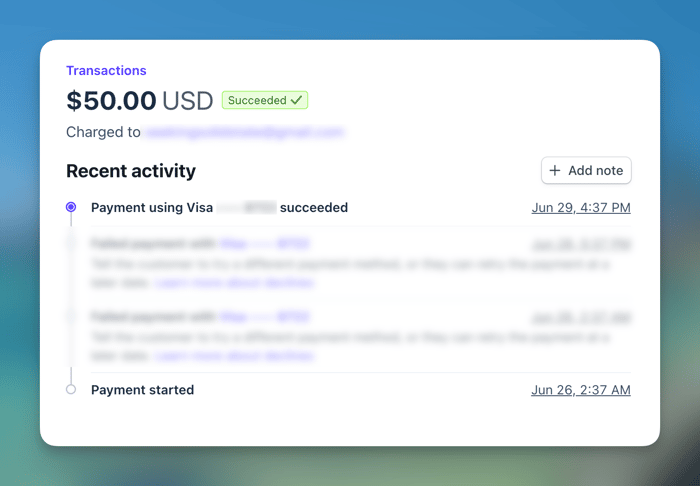
The channel lesson is the headline here, but the screenshot has a second one worth calling out: two failed payment attempts before the one that succeeded. At single-digit customers that's a footnote, but that retry/dunning pattern is exactly where SaaS quietly lose revenue once volume picks up — worth instrumenting now while it's cheap to look at closely, not after it's 5% of MRR you can't explain.
This is such an important lesson that founders keep learning the hard way. The intuition is "technical people will build it themselves", but in reality technical people are often the first to outsource work that isn't core to their business.
Hacker News users have already spent years building things themselves. They know exactly what's worth their time and what's not. If your product saves them 10+ hours on business operations, they'll pay.
Linkedin technical crowds are often trying to look smart. Twitter/X technical circles are curated for very specific demographics. HN just wants stuff that works.
How many customers did you get from the HN post, and what was the conversation like? Curious if they had specific use cases in mind or were just looking for automation in general.
The X/LinkedIn traffic failed you for a reason worth naming: warm audiences give you attention, cold communities give you buying signal. Your circle engaged out of friendship, HN strangers paid because the product cleared a harder bar. I'd treat every channel test from here as a search for strangers with the problem, not audiences who already know you.
your platform might be built for people who don't have much technical expertise, but when i think about it, some of your big buyers might actually be people with technical expertise, because they are always looking for ways to automate things and reduce the amount of work they have to do. so yeahh i think your realisation explains much about who your real users can actually be
Totally agree on testing channels, but I'd push the takeaway one step further: the surprising part isn't that HN converted, it's what that tells you about who your actual buyer is.
You built Michii for non-technical people, but it converted on the most technical channel there is. That's a real signal. The person who found you on HN and paid probably isn't your "non-technical entrepreneur," it's a technical builder who wants to spin up a side business without doing the ops themselves. Same product, different buyer, and that reframes your positioning more than your channel list.
I'd go back to those first customers and ask what they'd have typed into Google to find this. If the answer sounds nothing like "AI agents for non-technical people," your best channel and your best messaging just changed together.
For what it's worth, I'm about to test HN for my own tool this week, so this is timely. One data point is a signal, not a strategy though, so I'd try to confirm it with the next handful before rebuilding anything around it.
This is a classic pattern - HN users actually understand the value of delegating work better than generalists. They see your product and immediately get "this saves me time I'd rather spend on things I can't outsource." Your circle might self-select for builders first, not problem-solvers.
Key insight you might dig into: does HN convert because they understand the problem better, or because they're actually pricing your time at a higher value? That distinction matters for how you acquire next. If it's the latter, you might find similar audiences beyond just HN.
Exactly
One takeaway here is that audience fit and buyer fit aren't always the same.
A technical audience may understand how to build your product, but that doesn't automatically mean they'll build it. Sometimes the people who understand the work best are also the ones who value paying someone else to avoid it.
Nice find. The pattern I keep seeing: the channel you think is wrong for your product is often the one with the least competition for attention. HN audience is technical but they also respect tools that save technical people time. Your circle being non-customers is actually a signal, not a problem.
Exactly. Also, HN folks tend to try new products and pay for them if it looks interesting enough.
HN audience is self-selecting — they're builders themselves who respect the craft. A well-written Show HN with real numbers still outperforms most paid channels for early traction.