From physical product to $10k/mo app
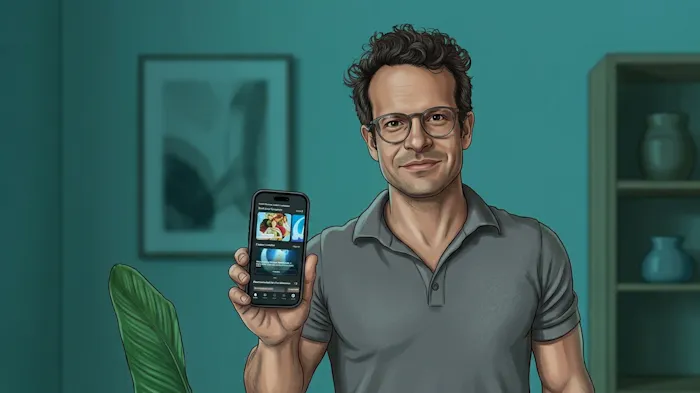
Umberto Mezzadra built a physical product designed to reduce screentime for yoga practitioners. And then he turned it into an app. The irony is not lost on him.
He launched a year ago and made $120k in 24 hours. Now, the app is $10k MRR.
Here's Umberto on how he did it. 👇
Coming back to tech
Hi, I'm Umberto, founder of Floga — a mobile app for yoga teachers and practitioners. We pre-launched in May 2025 with a lifetime deal and did over $120K in 24 hours — entirely outside the app stores, so we kept every dollar. Today, Floga has around 4,000 active users and does roughly $10K/month between subscriptions and annual plans.
My path here wasn't linear at all. I'm not a developer — I studied economics. I had a short stint in the corporate world, and back in 2012, I raised seed funding for a startup that ultimately failed. After that, I stepped away from tech completely: I became a ski instructor, then worked as a fashion photographer. I came back around 2016, this time as an advertiser and growth strategist, helping companies scale. That's where I really learned how to launch, position, and sell.
Then in 2020, during COVID, my girlfriend and I started PlayPauseBe as a side project — a brand built around decks of cards that help yogis build and practice their own sequences mindfully. The whole idea was screen-free, mindful practice. We launched our first deck on Kickstarter and did over $200K in the first month.
So here's the plot twist: About a year and a half ago, I started feeling like what we'd built could become something bigger. What if we took these physical tools and used technology to push them further — without losing the mindful core? Going from "put your phone down and practice" to "here's our app" was a contradiction I had to work through carefully. One evening, I sat down, sketched the concept, found a great developer here in Lisbon, and that's how Floga started.
The "builder's pull"
Making products that genuinely make people feel better and improve their lives drives me. That sounds simple, but it's the thread running through everything I've done.
With PlayPauseBe, the mission was mindful, screen-free practice — giving yogis a tool that helped them slow down and reconnect, not another app screaming for their attention. Seeing people use the decks in their daily practice and hearing how they changed their relationship with yoga was incredibly motivating. That feedback loop is addictive in the best way. And like I said, Floga came from wanting to take that same intention further.
The builder's pull also motivates me. I love the craft of launching something — positioning it, telling the story, watching it land with real people. After years of doing growth for other companies, I wanted to point all of that at products I believed in — products that left people a little better than I found them. When the thing you're selling genuinely helps someone, marketing stops feeling like marketing.
Focusing on validation
Before writing any code, we first focused on validation. I talked to many people in our target market about the problem I was solving, but I never told them I was building an app or led them toward an answer. We wanted honest, unbiased reactions, not politeness. We did this with some of our PlayPauseBe customers and received incredible feedback exactly because they didn't know what we were fishing for.
Once the idea proved viable, we asked, "What minimum development stage would allow the app to convey enough value — present and future — for early adopters to pay for it?" Not a finished product. Just enough to show real value and a clear future direction. For us, that meant a solid core with two well-built yoga styles and a roadmap people could believe in.
My philosophy is to build the product and the revenue engine simultaneously, monetizing as early as possible. So while we were building, I was already planning the whole launch machine around the build timeline.
Challenges with the initial product
We had a lot of challenges right off the bat.
The hardest part was that I had zero experience with mobile apps. I'm not a developer, so I was learning how to scope, prioritize, and manage a build while making decisions about it. The biggest trap there is not knowing what "good enough" looks like — when to keep polishing versus when to ship. As a non-technical founder, you have to get comfortable trusting your developer while still pushing on the things that matter to users.
A second challenge was one I touched on above. Our whole brand was built on screen-free, mindful practice — the opposite of the typical app, engineered to grab attention and keep users scrolling. So we had this tension: how do you build an app for people who fell in love with you because you told them to put their phone down? We couldn't just copy the standard playbook of maximizing time-on-screen and notifications. The app had to support the practice and then get out of the way.
That made the build complex, because staying true to our purpose meant the app couldn't just be functional — it had to be aesthetically stunning and evoke a sense of mindfulness the moment you open it. Every screen had to feel calm, intentional, beautiful. That's a much higher bar than "does it work," and it shaped countless design decisions. I think we pulled it off — Floga is by far the most beautiful yoga app out there.
The third was scoping the MVP without gutting the vision. We had to decide the minimum that still conveyed real value and a clear sense of its direction — enough to get early adopters to pay — while resisting the urge to cram everything in. Cutting features you're excited about is harder than it sounds, but if you don't, you never launch.
A mobile stack
Here's our stack and why we chose it:
Flutter for the app. It's open source and provides one codebase for both iOS and Android, a huge deal for a small team — we don't build and maintain everything twice. It also provides the polished, custom look we wanted, which matters a lot given our focus on design.
Firebase for the backend. It's around $25/month at our stage and handles many features out of the box — auth, database, hosting — so we didn't need to set up our own infrastructure. For an early-stage app, it's hard to beat on cost and speed.
RevenueCat for monetization. It's essential. It handled our lifetime deal and now manages cross-platform subscriptions, so we don't wrestle with in-app purchase plumbing ourselves. I also pull revenue analytics from it.
Vimeo hosts all our video content. Clean playback, no ads, reliable.
OneSignal for push notifications.
A two-phased business model
Our business model evolved in two phases.
We launched with a lifetime deal rather than a subscription because the app wasn't fully built yet, and we felt it was wrong to ask people to pay monthly for something still in progress. We ran it entirely outside the app stores, keeping the full revenue with no platform commission. That launch generated $120K in 24 hours, providing us with the capital and committed early users to continue building.
From there, we continued developing the product based on early adopter feedback, and once it was further along, we introduced subscriptions. Since then, the focus has been on growing recurring revenue rather than one-off sales.
We now have a healthy base of active paid and free users, and we are currently reworking our onboarding and conversion flow to better bring people into the app.
The content machine
For growth, two channels worked together.
My biggest advantage was not starting from zero. Through PlayPauseBe, we had already built an audience who knew and trusted us. The challenge involved bringing them on the journey — explaining why a screen-free brand was building an app and why it represented the next evolution of what they already loved, rather than a contradiction. An audience that already believes in you is your most valuable asset; warming them up properly is worth more than any ad.
Simultaneously, I ran lead generation to reach people who had never heard of us. This is a completely different approach — these people need education and trust before they will buy.
The content machine ties both together. Before promoting anything, I ensure a content buffer is ready — emails, videos, landing pages — all designed to educate and build trust simultaneously.
Our early adopters also became their own community; their word of mouth and feedback loop drove significant growth.
Turning hesitation into decisions
The launch itself presented a big obstacle. People expect free trials — try it for a month, get a refund if you don't like it. We asked them to pay up front for something unfinished.
After weeks of warming people up and being completely transparent about what existed and what was coming, I drew a clear line: no refunds, the deal is the deal. If you had doubts, you could wait for the subscription later — but the lifetime offer would be gone. Combined with limited spots and a tight window, this turned hesitation into decisions, which largely contributed to the launch's success.
If I had to start over, I'd trust the "ship before it's ready" instinct even sooner. Perfectionism is often just fear dressed up as preparation. Real breakthroughs happened the moment we put something unfinished in front of real people and let their feedback guide us. It's uncomfortable, but it's far more valuable than polishing in isolation. Move sooner, ship earlier, and trust that you'll learn faster in public than you ever will in private.
The best things he did
One of the best things we did was talking to real people early and often. Without leading them. Asking customers about their problems — not pitching them your solution — gets you the truth instead of polite encouragement, and it saved us from building the wrong thing.
That, and monetizing early. Charging from the start, even before the product is finished, forces clarity and funds the build without giving away equity or control.
Move sooner
A few things I'd tell anyone starting out:
Stop waiting for perfect.
Monetize as early as you can. Don't wait until the product is "done" to charge.
Build an audience before you build the product. People who already trust you are your single most valuable asset. If you can launch to warmth instead of silence, everything gets easier. Start sharing, teaching, and building trust now, even before you have something to sell.
Don't underprice yourself. A lot of founders price everything low out of fear that nobody will buy. That's a mistake — you leave serious money on the table, and you signal low value. Structure your pricing intentionally instead of just throwing out the lowest number you can stomach.
Talk to real people, honestly. Ask about their problems instead of pitching your solution. Polite encouragement feels good, but tells you nothing. The truth is what saves you from building the wrong thing.
And above all — move sooner, ship earlier, trust the process.
What's next?
Our main goal is to become the biggest yoga app in the world. The app is one piece of a larger, tightly interconnected system.
We're not just a software company — we're a brand and an ecosystem. We have physical products. We're a yoga school, providing real education and training and certifying teachers. We have apparel, props, and accessories. The standard across all of it is the same: top quality, nothing compromised. The app, the physical tools, the education, the community — they all feed each other. Someone you train as a teacher becomes part of the app; someone who finds us through the app discovers the products and the school.
That's the vision: a complete, beautifully made world around mindful practice, where every touchpoint reflects the same level of care. Someone who saw what we're building behind the scenes put it best — they called us "the Apple of yoga." That's the bar we hold ourselves to: design, quality, and experience so considered that the whole thing feels inevitable once you're inside it.
Follow us on Instagram — @flogaapp. We regularly post video updates where our small team shares what we're building behind the scenes. It offers the most honest look at how things progress day to day.
You can also check out Floga.io, though I'll warn you it's a bit of a moving target right now: we're in the middle of a rebrand and building a brand-new website, so expect things to look different soon.

Leave a Comment
The line that stuck with me: the app had to "support the practice and then get out of the way." I work on connected hardware with companion apps, and that's the exact tension I live with. The product is the device, and the app only earns its place by disappearing once it's done its job. Most app playbooks optimize for time-on-screen, so it's refreshing to see restraint treated as a design constraint instead of a growth problem.
One thing I'd love your take on: you name the existing PlayPauseBe audience as your biggest advantage. For founders launching to silence, does the lifetime-deal-before-it's-built playbook still hold, or did it only work because the trust was already there? Curious where you'd draw that line.
The LTD launch strategy here is a masterclass. "No refunds, the deal is the deal, limited spots, tight window" — four levers that turned warm traffic into revenue. Most founders are scared to draw a hard line. You proved it works.
Also respect the honesty about the tension: building an app for people who came to you for screen-free practice. That kind of brand integrity is rare. Most would just ship and rationalize later.
One question: how are you handling the onboarding flow for people coming from the physical products who aren't app-native? Feels like that's the make-or-break moment for retention.
building an audience before building the product isn't new advice but launching to $120k in 24 hours is the version of it that makes the advice legible. the PlayPauseBe audience didn't just provide revenue, they provided the trust that made the no-refund hard deadline possible. that combination of warm audience plus scarcity plus no safety net is very hard to replicate without having done the years of audience building first
"Launch to warmth instead of silence" - that's the line I keep coming back to.
It sounds obvious in retrospect, but most founders default to building first and assuming an audience materializes at launch. You did the opposite - years of audience trust from PlayPauseBe became the foundation for Floga. Without that, the $120K lifetime deal probably converts at 5% of what it actually did.
I currently building toward a B2B launch (August), and warming a ommunity ahead of time is much harder than starting from scratch sounds. Every week of community work feels like nothing is happening - until launch day, when you realize the entire 24-hour conversion came from people who already had context.
The part I'd love to hear more about: how did you balance "build for the audience you have" vs "the audience needs to evolve"?? Floga's audience came from a screen free brand, and you had to bring them along to an app. That's a much harder migration than most founders ever face,,,,
was there an inflection point where you knew the original audience had genuinely bought in, vs just being polite about it???
The outside-the-app-store prelaunch point is interesting because it forces the promise to be concrete before the store listing does any work. I’m seeing a smaller version with Kinetic Override: people react better to “Android 15+ no-root macro recorder for repeated taps/swipes/long-press loops” than to broad “automation app” language.
Great article, Umberto. I've always been terrified of charging people before a project is totally finished, but reading this makes me want to rethink that. I definitely have a bad habit of trying to make things perfect before showing them to anyone. Thanks for the motivation!