Building a 5-figure-MRR software review
site
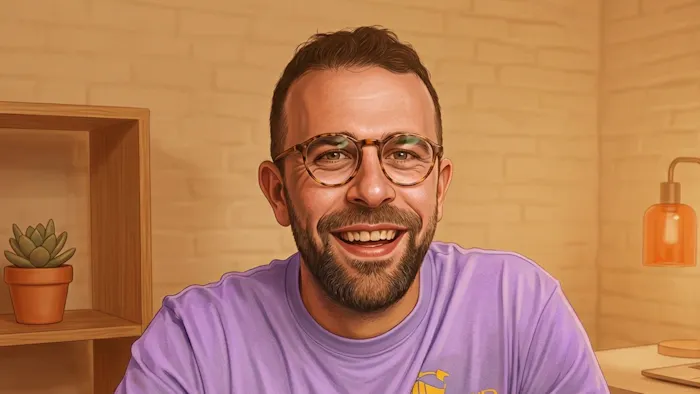
Francesco D'Alessio is the founder of Tool Finder, a software review site that is currently bringing in a 5-figure MRR. And he's currently building a portfolio of apps and websites.
Here's Francesco on how he's doing it. 👇
A five-figure MRR
My background is in marketing and sales. I'm currently working on Tool Finder, a software review site that helps people discover new tools, save money, and stay current with software trends. It helps teams, individuals, and professionals find the right tool for their needs.
I also spun up an iOS app called Bento and a site called scrumplanning.com that helps people optimize scrum estimation meetings.
I'm a one-man team. I manage all content, production, development (with AI assistance), and apps. Tool Finder currently has a five-figure MRR, and Bento is nearly at a four-figure MRR.
Launching by accident
The initial Tool Finder site was built with:
Notion (backend)
Super (frontend)
Tally (form collector)
I built it in a weekend. It was very much no-code + domain.
Then, I accidentally shipped it on Product Hunt after scheduling it and forgetting about it. And somehow, people upvoted it to #1 for the day.
The initial version worked for two or three weeks, but then I realized it needed scale for SEO, better quality builds, and a professional feel.

Business model and growth
Our business model combines sponsorships and affiliate revenue. We also sell deal passes. These passes offer a way to save on software, with one pass unlocking exclusive vendor discounts.
Our long market presence is a big advantage. At the start of Tool Finder, about 5 years ago, I avoided featuring myself in my content. However, I now believe people appreciate friendly, easy software explanations, so I have leaned into that in the last three months.
I now produce a lot of YouTube content, which helps us maintain strong vendor relationships, stay current, and consistently secure embargoes on news content.
Understand how you work
One of the most important things each of us can do is to understand how we work.
I now focus on my work style and align the business with it. The more I learn about how I operate, adapt, and learn from mistakes, the better the business outcomes.
The same applies to our businesses. Early on, I hired a video editor, a writer, and even brought on a business partner who handled development. While these weren't mistakes, per se, they weren't necessary either. Given the business's scope, it didn't need extensive staffing to run successfully.
If I could go back, I'd tell myself: "Don't overhire, don't expand beyond remits, and focus on what the business does well."
Nurture your creativity
So, if I had to give advice, that would be it: Understand how you work. Sit with yourself. Understand your own systems. It will change how you produce.
And nurture your creativity and decision-making skills. In a world of AI, it's going to be more about the creativity you bring. So your sleep, health, thinking, and body will all be factors.
What's next?
I'm in a transition period.
First, I will solidify Tool Finder with a fresh new look and more stable content pillars. Secondly, I will upgrade Bento and Scrum Planning to better position them in the market. Third, I will build a series of apps and tools that help people build confidence in specific areas.
I know this sounds vague, but hopefully it will make sense as you follow along.
Join us on the newsletter and on YouTube — just search "Tool Finder".

Leave a Comment
Really impressive journey — launching by accident and hitting 5-figure MRR is the dream. The one-man team doing content + dev + product is relatable. Just launched WhaleTrack myself (free whale tracker for Polymarket) — still early but posts like this are good motivation to keep going. What was the biggest traffic source that moved the needle early on?
Great story. I'm curious—what was the biggest traffic source that helped Tool Finder reach consistent growth in the early stages? SEO, social media, or partnerships?
Well, I’m submitting my tool!
The shift from faceless brand to founder-led is the most important move here and it's underrated as a trust mechanism specifically for comparison/review sites. When the site is anonymous, every affiliate link looks suspicious. When there's a person explaining the recommendation on camera, the incentive structure becomes visible in a way that written disclaimers never achieve.
The three-revenue-stream model (sponsorships + affiliate + deal passes) is also worth noting because it's more resilient than pure affiliate. A site that can go to a vendor and offer sponsored placement plus affiliate plus an audience-facing deal product has more negotiating surface than one that can only offer CPC.
I'm building a comparison product in a different vertical (international money transfers) and wrestling with the same trust problem. One thing I've noticed: the categories where affiliate comparison is most distrusted are also the ones where the stakes feel personal — financial products, healthcare, anything that feels like the user is being steered rather than helped. Did you find that the video presence specifically moved trust metrics, or was it more that it improved vendor relationships and the product quality followed from there?
most indie wins come from staying small longer than feels comfortable
tool finder scaling makes sense because it’s systems + content, not headcount
Launched by accident and then doubled down is such a better story than 'I identified a market gap.' Most durable things I've built started that way - usually something I'd want but couldn't find. The deliberate part was staying.
Cool website and thats impressive.
Great story! It’s really impressive to see someone dedicate five years to developing one idea. That dedication is key to success.
I'm curious about how you predicted the market would be interested in this concept. Did you conduct competitor analysis to identify a unique gap in the market? Anyway, I wish you all the best!
Accidentally shipping on Product Hunt and landing #1 is the kind of story that sounds made up but probably worked precisely because there was no launch anxiety behind it. The point about understanding how you work before scaling a team is underrated, a lot of early-stage founders hire to solve discomfort rather than to solve actual capacity problems, and that distinction is expensive to learn. The creativity angle at the end is where I'd push back slightly though, in a world of AI the creativity advantage is real, but I think execution consistency is what actually compounds over five years more than any single creative insight. Curious what made you finally lean into showing your face after five years of staying behind the brand.
The accidental Product Hunt launch is a great reminder that sometimes done beats planned. The point about not overhiring early hits close to home. As a solo founder, every 'I could outsource this' decision is actually a 'is this core or not' decision. How did you know when Tool Finder was ready to bring someone in versus staying lean?
This is the proper way of doing it! Way to go!
Now replicating that accidental PH launch is almost impossible. lol
software review sites feel fragile to me - SEO moats erode fast and comparison platforms always catch up. curious what makes Tool Finder defensible long-term. is it audience trust or something else in the model?
it's really interesting how you started producing contents for the community. It's something I'm really thinking about, because it's not usually in saas, but I think that has a lot of pros
Interesting
Interested in the concept of Indie Hackers engaging with the community of like minded developers. I love the success stories on here, for someone starting my journey it is my hope to learn from their successes. Thankyou for the share.
Very interesting idea!
We are looking for someone who can lend our holding company 175,000 US dollars.
We are looking for an investor who can lend our holding company 175,000 US dollars.
We are looking for an investor who can invest 175,000 US dollars in our holding company.
If you lend our holding company 175,000 US dollars, I will return your money to you as 350,000 US dollars on 30/03/2027.
If you invest 175,000 US dollars in our holding company, I will return your money to you as 350,000 US dollars on March 30, 2027.
I will return your money to you as 350,000 US dollars on March 30, 2027.
I will repay the 175,000 US dollars you lent to our holding company as a loan to you as 350,000 US dollars on March 30, 2027.
We will use the 175,000 US dollars you invested in our holding company to grow our business, and on March 30, 2027, we will return your money to you as 350,000 US dollars.
I will return the 175,000 US dollars you invested in our holding company to you as 350,000 US dollars on March 30, 2027.
You will receive your money back as 350,000 US dollars on March 30, 2027.
I will refund your money to you as 350,000 US dollars on March 30, 2027.
You will be earning twice as much in a few months.
You will have doubled your money in a few months.
So how will we increase your money?
With the 175,000 US dollars you lent to our holding company, we will establish an artificial food production company.
With the 175,000 US dollars you invested in our holding company, we will establish an artificial food production company.
With the 175,000 US dollars you invested in our holding company, we will establish an artificial food company that produces tastier, higher quality, healthier, protein-rich, and nutritious food products.
In the artificial food company we will establish, we will use the genetics of animals, vegetables, plants, and fruits to artificially produce tastier, healthier, and protein-rich food products.
We will produce a wide variety of artificial food products.
We will produce fruits, vegetables, snacks, meat products, dairy products, artificial water, beverages, and other artificial products.
Since the food products we will produce are artificial foods, we will have prevented famine.
Many countries today are experiencing famine and drought; by establishing an artificial food company, we will be able to prevent both famine and drought.
We will be able to produce more protein-rich, healthier, and tastier food products in a laboratory environment without the need for agriculture or animal husbandry.
We will produce new types of fruits and vegetables; these new types of fruits and vegetables will greatly attract people's attention.
Thanks to our artificial food project, humanity will be able to easily produce food without agriculture and animal husbandry.
As wars increase around the world, leading to increased famine, the artificial food products we will produce will be in high demand globally.
By developing systems that can produce water from the air, we will also be able to prevent water scarcity.
As our capital increases, we will open artificial food production facilities in all countries of the world. Our goal is to sell the artificial food products we produce to the whole world.
The products we will produce will be longer-lasting, and because they will be longer-lasting, we will also save money. We will produce environmentally friendly products.
Since the food products we will produce will be artificial foods, people will be able to consume the same fruits and vegetables in both summer and winter.
People will be able to consume summer fruits and vegetables at cheap prices even in winter.
We will sell the artificial food products we produce at a low price, so people will be able to buy healthier, tastier, higher-quality, and longer-lasting food products at a low price, and in this way, we will prevent global food shortages.
The products we produce will have a long shelf life; since we will be producing long-lasting food products, they will be environmentally friendly, and in this way, we will also save money.
Thanks to our artificial food project, people will now be able to consume high-quality food products at affordable prices.
How will we market the artificial food products we produce?
We will sell the artificial food products we produce internationally to the whole world.
By selling our artificial food products internationally, we will generate more profit.
We will ensure that our products are sold internationally by using 13 different methods.
We will market our product using 13 different methods.
1. Method: By making agreements with supermarkets, grocery stores, and food retailers in many countries, we will ensure that our products are sold by supermarkets and all retailers in many countries.
2. Method: As our capital increases, we will open our own markets worldwide to sell our artificial food products directly to consumers.
3. Method: We will launch a dedicated e-commerce website for our artificial food products. This platform will allow customers worldwide to purchase our products online, which will significantly boost our global sales volume.
4. Method: We will offer our artificial food products for sale on the online sales sites of many countries.
5. Method: By selling our products to wholesalers in many countries, we will enable them to sell our products to local retailers in their own countries. Thanks to the wholesalers, our products will sell even faster.
6. Method: We will implement a referral system. If people find customers for our products and help sell them, they will receive a 25% commission for each customer and thus earn income.
7. Method: We will partner with high-reach influencers across platforms like Instagram, TikTok, and YouTube to promote our products. This strategy will allow us to leverage their large audiences and significantly increase our sales.
8. Method: By utilizing advertising platforms such as YouTube Ads, Google Ads, and Facebook Ads, we will reach a global audience with our promotional videos, which will rapidly accelerate our sales growth.
9. Method: We will attract millions of customers to our product using our own advertising techniques. Thanks to our strong advertising network, our artificial food products will sell quickly.
10. Method: We will promote our artificial food products by placing posters in areas with high population density in many countries.
11. Method: We will pay news and blog sites to advertise our product, thereby making it known to a large international audience.
12. Method: We will send a promotional text about our product to millions of emails using email marketing.
13. Method: We will advertise our product internationally on television channels.
By using various advertising techniques, we will achieve significant profits within a few months, and our products will become even more popular internationally.
How much profit will we make, on average, from the artificial food products we produce?
We decided to enter the artificial food sector because it is an innovative sector; our goal is to become a pioneer in the artificial food sector.
Our products will sell very well internationally because we will be producing healthier, tastier, more nutritious, and protein-rich artificial food products.
Even if we sell 800,000 kilograms of tomatoes at 3 American dollars per kilogram in just 4 months, our earnings for those 4 months would amount to 2,400,000 American dollars.
Just selling tomatoes alone would bring us millions of dollars in revenue within 4 months.
Because we will be producing and selling not just tomatoes but also various types of artificial food products, we will generate billions of dollars in revenue within a few months.
The artificial food products we will produce will be tastier, richer in protein, and healthier, so they will be in high demand internationally and will bring us billions of dollars in revenue.
Since we will be producing new types of fruits and vegetables, it will attract a lot of interest from people and will increase our sales rate even more.
We will open our first artificial food production company in Brazil.
We will establish our first production company in Brazil because it is a country where we can both source production materials and make more sales.
How can you contact us?
For detailed information about our artificial food project, please send a message to my Telegram username or Signal contact number below. I will provide you with detailed information.
To learn how you can lend our holding company 175,000 US dollars, please send a message to my Telegram username and Signal contact number below. I will provide you with detailed information.
To learn how you can increase your money by investing 175,000 US dollars in our holding company, send a message to my Telegram username or Signal contact number below. I will provide you with detailed information.
To learn how you can invest 175,000 US dollars in our holding company and participate in our artificial food project, please send a message to my Telegram username or Signal contact number below. I will provide you with detailed information.
For more detailed information, please send a message to my Telegram username or Signal contact number below. I will provide you with detailed information.
My Telegram username:
@adenholding
Signal contact number:
+447842572711
Signal username:
adenholding.88
Software reviews are one of those niches where authenticity and time invested actually create real defensibility. You can't fake having a real opinion that people trust, and the barrier to entry is more 'willingness to write consistently' than capital. This is a good case study in turning sweat equity into sustainable revenue.
The part that resonated most with me wasn't the MRR, but "understand how you work."
A lot of founders spend years trying to build businesses that look successful from the outside, instead of building businesses that actually fit how they think, create, and make decisions.I've also noticed that many founders hire, expand, or add features before understanding what kind of company they really want to run.The sentence "don't overhire and focus on what the business does well" is probably more valuable than many growth tactics.Really thoughtful interview.
This resonates a lot. I just launched my first product with zero budget too — built a React dashboard template and used free tools (Vite, Lemon Squeezy) for everything. The hardest part for me was payment setup, not the actual building.
The pivot from faceless brand to personal YouTube content after 5 years is the real unlock here. But I'm curious about something Matthew raised. did leaning into video change how vendors approached you, or just how audiences converted? For B2B-adjacent plays like yours (or B2G tools like mine), personal brand seems to flip the script entirely: vendors start pitching you instead of you hunting embargoes. That's a different revenue lever than just better CTR.
"Don't overhire" is probably one of the most underrated lessons here.
It seems like many indie founders assume growth means adding people, but your story suggests understanding your own workflow can be a bigger advantage than building a team too early.
Have there been any tasks you've tried delegating multiple times but eventually brought back in-house?
The scrumplanning mention caught me because I'm building Meet4 right now, which solves a different but related meeting problem: the 30+ email back and forth just to find when 3 people can meet and where.
What made you spin up scrumplanning as a separate site instead of folding it into Tool Finder? Curious if the separate brand helped with SEO or if it was more of a "let me just ship this" call.
Also the "launched by accident" story is something else. Most people agonize over launch timing and you accidentally hit #1 on Product Hunt. There's probably a lesson buried in there about not overthinking it.
That is interesting, reaching that MRR in such a generic niche sounds very impressive.
nice
I just looked up Tool Finder, and I have to say you have a gift for design, but I think the platform is missing something. You must obtain the information from pop-ups after clicking each product, specifically an Offer/AggregateOffer schema. This will increase your visibility with search engines by making not just your website but also promo codes rank for terms like [product-name] promo codes. I don't have a formal education in SEO, but I have been doing it long enough to know a few tricks that work. Just about 2 months ago, I was able to take a database website from 0 traffic to 150k organic traffic through AI sitations, and search engines. I don't know you, and you don't know me, but trust that this will work.
The "5 years of hiding yourself, then leaning into video in the last 3 months" pivot is the part I keep coming back to.
It echoes something I've been wrestling with on the marketing side. I run 3 products from Seoul, a B2B ad sales SaaS plus two consumer apps (one of them at 140K+ App Store reviews). For years the brand carried everything: clean, minimal, no faces. Then over the past month I've been doing the opposite - personal X account, founder narrative on LinkedIn, building-in-public on IH. The shift in conversation quality even at tiny follower counts has been jarring.
What I'd love to hear more about — slightly different angle from Dinesh's question: did the YouTube-face shift change your vendor conversations too, or just audience-side conversion? The underrated story is that vendors (sponsors, embargo partners, deal-pass sources) often need to see the person behind the brand before they offer the deeper relationships. Curious if Tool Finder's embargo access or deal-pass quality shifted at all after you stepped in front of the camera.
Leaning into video content and putting your face on the brand after 5 years of staying hidden is a massive shift, but it makes total sense. With AI completely saturating generic text reviews, personal curation and video walkthroughs are pretty much the only way to build real trust now. Have you noticed the YouTube traffic converting better into Deal Pass sales compared to your cold SEO traffic?
nice post