Hitting $35k MRR after struggling to make money online for four
years
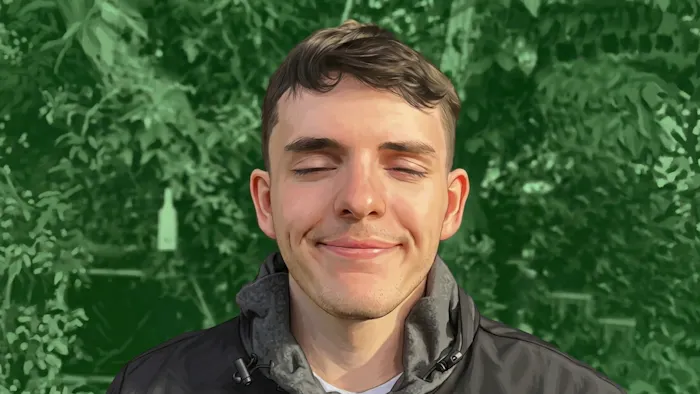
Jack Friks spent three years trying to earn money online before finally learning to code. Then, he spent another year trying to grow his first app. He thought he was a failure until finally, a new idea gained traction.
Now, Post Bridge is bringing in $35k MRR.
Here's Jack on how he did it. 👇
Trying everything
Six years ago, I dropped out of my last semester of college to make money online. I didn't want to work a traditional job. I wanted to be in control of my daily schedule and my work. I realized I would be a miserable employee.
So, I tried everything:
Print-on-demand T-shirt designs
Affiliate marketing blog posts
YouTube videos — 2000+ videos in under two years
Crypto — I made money and lost it all
Finally, three years ago, I decided to learn to code and build my own apps.
Most of my focus currently goes into Post Bridge, a social media scheduling tool for small teams, featuring agent-friendly workflows. I launched it one and a half years ago, and it generates $50k CAD ($35K USD) MRR. In the last six months, I doubled the MRR after an eight-month plateau.

TikTok validation
For my first app — not Post Bridge — I validated it on TikTok before building it. ChatGPT created mockup images, then I made a TikTok saying, "What if you could do X?" Three people commented, wanting an app like it. So I made it.
From there, I made videos nearly daily explaining the idea and showing my progress. By the time I was ready to launch, I had 4,000 people following me across TikTok and Instagram, ready to try the app! And on launch day, a few people bought it — even though it sucked really badly.
I kept making daily update videos on YouTube, IG, and TikTok to market it, but eventually the hype stopped because the app wasn't valuable or good enough.
Three months before Post Bridge's creation, I was on a walk with my now-fiancée and I broke down crying. I thought I was a failure. I had been trying to make money online for four years. I had spent a year learning to code. And I was still struggling to break $3k/mo.
But then, I lucked out. In an attempt to grow my first mobile app, I was posting multiple TikToks daily, then cross-posting them to four other platforms — all manually. This didn't scale, so I made an API-based scheduling solution.
I shared it on Twitter, and despite my lack of followers, it blew up — many others wanted it too!

Building the product
Knowing that people eagerly awaited its release was a huge motivation for me. It helped me work long days for a month — and it didn't feel like work. It was quite fun and exciting, even when everything was breaking.
I built Post Bridge from scratch in about a month. It only worked on a few initial platforms — a fraction of what I support now. It cost me nothing except time to build. Now that I have users, costs are between $100 and $200 per month.
I did it all alone, and I still do. The only exception is some contractors I hired a while back to clean a few things up.
My tech stack includes Next.js and a simple backend hosted separately for the API with Unkey + Supabase. I now use R2 for storage because Supabase egress costs were about $1,000 a month and growing (R2 is zero, which is nice).
Early on, I faced significant challenges: I was frequently attacked and DDoS'd because Post Bridge was public. Additionally, some people took issue with my success as a new coder.
Since then, I have learned a lot, adding rate limits, enhanced security, and monitors for these issues, plus Vercel WAF.
No free plans
I first make every app for myself, then I price it and release it.
I've learned not to offer free plans. Instead, I rely on hard paywalls or credit card-based free trials to generate revenue. One exception is a mobile app that generated significant revenue, which is freemium (Lovelee Couples App).
Charge for your product. Don't fear low sales. This filters out noise and forces you to provide real value, which is essential for success! It's a very good thing!
Building in public
For growth, I post my thoughts on X, and I make videos on TikTok and Instagram. I also created dev logs on YouTube for a year.
I post new features, but those quickly become stale and bloated, so I often find new ways to articulate core concepts or showcase existing features. For example, I created a TikTok format and reused it 300 times, modifying parts until views declined, which brought over 30,000 downloads to one of my mobile apps.
This all helped me explain what I do and its interest and value to others. People connect better with other people than with AI-generated content or ads. And it allowed me to build a Twitter following related to my SaaS niche — though the following grew mostly after the success, not before.
Just keep going
My biggest challenge was always finding daily wins during dark or hard times.
It's easy to keep going with existing momentum or routine. In fact, my daily videos became such a deep part of my routine that I even made them on vacations. But then some days, you wake up and doubt you'll ever make it.
Especially as you feel the pressure of savings running out. It's hard to stay optimistic. It's hard to believe in yourself.
Sorry, I have no golden wisdom here. Just keep going.
Looking up to others
Having others to look up to helped me a lot. It helps you to see what's possible.
Marc Lou inspired me, and Pietr Levels inspired him. It's the chain of knowing what's possible.
Books-wise, The Almanack of Naval Ravikant was a game-changer for me. I have deeply internalized this book since I was 18
Follow your curiosity
My advice? Follow your curiosity and interests instead of what is trending or the best business market to enter.
If you don't enjoy your work, your chances of success are slim. People who enjoy their work don't feel like they're working, which helps them persist and go further — even with limited resources.
Beyond that, take it one day at a time and be grateful you are alive.
And KEEP GOING!
What's next?
From here, I want to keep being myself while making more money and becoming more optimistic about the future.
You can follow along on X and my personal website. And check out Post Bridge.

Leave a Comment
This is one of the most authentic and useful stories I’ve read on Indie Hackers lately.
The journey is anything but linear: years of experiments, failures, reinventions, and then finally a product that finds its market. It’s the perfect example of how persistence beats talent when it comes to building online products.
Honest confession from someone who just figured out why he keeps failing.
I'm 18. I've spent a full year picking ideas, researching them obsessively, finding reasons they weren't good enough, and dumping them. Then picking new ones and doing the same thing.
i've too tried way many things my man :
dropshipping
print on demand
YT automation
3 SaaS ideas
Digital products (notion based)
Today I was on Perplexity trying to make the "perfect" post about my 8th startup idea. And it hit me — this is exactly what I've been doing for 12 months. Polishing thoughts instead of testing them.
I have no idea if the ideas I dumped were good or bad. I never found out. I killed them in my head before they ever touched reality.
Perfectionism is just fear with better branding.
I'm starting over with one rule: the only valid research is a real conversation with a real person who has a real problem.
Even to be very very honest , i'm genuinely lost , i can't even figure what to do , how to do it , you see it's been 4 years i'm using AI for different tasks , but still i suck at prompting , i decided to learn orchestration skills but ended up copy pasting code from llm to code editor , didn't even knew how to use AI at it's peak , leverage it smartly . I've been in the same place for a long time , and i can understand the joy and confidence you're feeling after 4 years of blind hustle and finally it got paid , huge congratulations my man . Keep growing
How do you differentiate the slow marketing grind from an idea that genuinely should be dropped because it's not worth it.
Tbh I never had this feeling that you described, people wanting me to build things, being excited for an idea. All ideas I have seem to already exist in some form. I don't let this discourage me since there's nouance in positioning and targeting a different audiences (I hope).
It blows my mind that this social media scheduling wasn't completly covered when you posted this. I'm sure there were solutions out there.Why would people connect with your half finished version then. Is it just that it's fine to have competition or do you need the completely new thing? I think about that a lot.
Dont get discouraged even if the idea exits, So many countries so many users, even the same app in different form or language can exists. It depends on the distribution how well can you reach your customer and once customers are made can they refer you. i am sure same app in multiple countries can co -exist.
I struggle with trying to figure our whether or not offering some type of access for free is a good idea. I love that it has the ability to get people interested, but I hate that it may get used to the point that people don't sign up for the paid version.
Massive respect for sticking with it for four years before this hit. The "thought he was a failure until a new idea gained traction" line hits hard — feels like most success stories skip over how long the "not working yet" phase actually lasts.
Curious how much of the $35k MRR came from compounding distribution/audience built over those years vs. the new idea itself being just a better fit? Trying to figure out how much of growth is "right idea" vs. "right idea + years of groundwork already in place."
The TikTok validation before writing a single line of code is the part most builders skip because it feels uncomfortable, but it's exactly why launch day had buyers even when the product wasn't good yet. The breakdown on the walk is also something more founders should say out loud, four years of trying and still under $3k/mo is a real place a lot of people are sitting in right now and don't talk about. The no free plans stance is one I've come around to as well, a paywall filters for people who actually have the problem, which makes every conversation with a user more useful. Rooting for the next double.
The detail that stuck with me is that Post Bridge came out of you being sick of manually
cross-posting your own stuff. I literally just launched my first thing this week and I've spent the
last few days hand-posting it to every community I can find, so it's weirdly reassuring that the
boring manual grind is where the actual product came from. Did you know right away it should be a
product, or did it start as just a script to make your own life easier? Congrats on the $35k either
way.
damn 4 years is a long time, nice persistence
Great sharing, i am doing the same but only on indiehacker and twitter but on twitter i am just getting 4 views
Thanks for sharing your insight that you first launched tiktok video & once users said they wanted it then you built the app. Its a great advice when people are building something new and dont know whether people want it or not.
"Just keep going" — no golden wisdom, just that. Somehow that hit harder than any tactical advice I have read today.
I launched my first Shopify app three days ago after six weeks of solo building. No team, no funding, from Pakistan. I am in the very early phase where every day without an install feels like evidence that it was a mistake. Reading that you broke down crying on a walk three months before your biggest success is the kind of context that actually helps.
The TikTok validation approach is something I completely skipped. I built first, then thought about distribution. You validated with mockups before writing a single line of code. That is a sequencing lesson I am taking seriously for whatever I build next.
The no free plans point also confirmed something I was second-guessing. AltGuard is paid from day one — $19/month with no free tier. Some people told me I should offer a free plan to get installs. Reading your reasoning makes me more confident that was the right call.
One question — during the eight-month plateau before you doubled MRR, what kept you from quitting? Was it the daily video routine, the existing revenue, or something else?
Genuinely grateful this post exists today.
Good story. I'm afraid not everybody has 4 year patience and power to keep going in the chosen direction. However I see one big difference between your path and IT path. You were good in Media not in IT. Most IT people are rather opposite and struggling with telling others about the app or service they have done. So am I. I have made the product but still don't have users to get feedback at least.
Four years is a long grind — curious what finally made things click? Was it the coding skills, finding the right idea, or something else that shifted?
MRR waterfall analysis usually surfaces the real story — in a SaaS dataset I worked on, Net New MRR collapsed to $852 in one month because churn absorbed all gross gains. Expansion revenue was masking acquisition decay.
the Supabase egress to R2 migration is genuinely one of the most underrated cost moves a solo founder can make. Supabase storage egress pricing at scale will surprise you every time if you're serving any kind of media or file downloads. R2 at zero egress cost is not a hack, it's just the right architecture for bootstrapped products. the problem is most people don't notice until the bill is already $1k/month and growing, and by then the migration is annoying because storage is usually woven into your auth and DB logic.
also the DDoS/security mention deserves more attention than it gets in these writeups. building in public with visible traction makes you a target, and a lot of indie hackers find this out the hard way. rate limiting and WAF should be early infrastructure not an afterthought. Vercel's WAF is decent at the edge layer but you also want app-level rate limits that aren't bypassable by rotating IPs. the fact that you added Unkey for API key management suggests you've thought about this more carefully than most.
one thing i'm curious about: did the DDoS attacks come mostly around specific content you posted, like a viral tweet about revenue, or was it more just baseline noise from being publicly visible?
Hitting $35K MRR after struggling to make money online for four years is proof that persistence pays off—success often comes after the hardest seasons.
Great success story and I love the honest humble reflection. Very interesting point about not being afraid to price your product!
This is so inspiring, I'm going through the same. Anyone can share any tips to help out
That transition from building for yourself to solving a problem for others is the sweet spot. Hard paywalls are the right call, too; they keep your support load manageable and focus your roadmap on users who actually pay for results.
"No free plans" is the part I keep going back and forth on. With PM OS I
launched with a generous free tier because I was worried about getting any
users at all, and reading this makes me wonder if that's actually working
against me — free users who never had to decide if the problem was worth
paying for don't tell you much.
The "daily wins during dark times" point is the most honest thing in here.
I'm two weeks into building distribution from zero after focusing entirely
on the product for months, and there's no momentum yet to run on — just
have to manufacture the discipline daily until something sticks. Good to
hear that's normal even for people who end up at $35k MRR, not just a
phase you're supposed to skip.
Thank you for including the crying-on-a-walk part. That honesty is rare here. The structural detail I find most instructive is that Post Bridge wasn’t an idea you went looking for. It was a byproduct of doing painful manual marketing for an app that was failing. The product died but the distribution grind surfaced a problem thousands of others had. That reframes what “failure” means for early founders. Even when the product loses, the unscalable work around it compounds: audience, skills, and most importantly, exposure to real problems worth solving. The four years weren’t wasted. They were the research phase you couldn’t have skipped.
The TikTok validation section hit differently for me. I'm currently doing exactly this with FamiStream. An IPTV app with parental controls. Posted my first video with zero followers and got 743 views on day 1. No likes, no comments, no signups yet. But the algorithm pushed it, which tells me the problem resonates.
The part about crying on a walk thinking you were a failure. I'm not there yet, but I can feel that place exists. Four videos in, zero waitlist signups, wondering if I'm just shouting into the void.
Just keep going' is both the most frustrating and most honest advice.
Four years of struggle, then $35k MRR — that's the part of the story most people skip. What actually changed? Was it a different type of product, a new channel, or just everything you'd learned finally compounding into one thing that clicked? Curious whether you could feel it working early, or if it surprised you too.
The Supabase egress lesson is one I wish more indie founders talked about openly. We hit a similar wall running 10+ apps — infrastructure costs that look trivial at launch compound fast once you have real users. Jack’s move to R2 is the kind of unsexy optimization that actually saves a business.
The part I keep thinking about: he spent four years trying things that didn’t work, and the thing that finally worked was a tool he built to solve his own workflow problem. Not a market gap analysis, not a competitor teardown — just “this is annoying, let me fix it.” That pattern shows up in almost every bootstrapped success story I’ve read on IH, and yet most of us (myself included) still default to top-down market research first.
The no free plan stance is interesting too. We experimented with both approaches across different products. Hard paywalls definitely produce better signal — every user conversation is with someone who already has skin in the game. But it requires your distribution to be strong enough to generate paid trials without word-of-mouth from free users. Jack had that because his content was the distribution. Without that, a paywall on day one can mean zero data to learn from.
Four years of grinding under $3k/mo to $35k MRR isn’t a hockey stick — it’s a staircase with a lot of flat landings. Respect for being honest about the crying-on-a-walk part. That’s the version of the story that actually helps people.
The "no free plans" stance is the part I'd push back on slightly, or at least add nuance to. It clearly worked for Post Bridge, hard paywalls and trial-by-card filter out the people who were never going to pay anyway. But he also says the following that gave him those first buyers on launch day came from a year of daily videos before the product existed. That's a free thing too, just time instead of product access. The lesson isn't really "never give anything away," it's "decide what currency you're giving away and make sure it's the one that costs you the least while building trust."
The DDoS and security pushback he mentions almost in passing is the more interesting bit to me. Building in public as a solo founder means your wins are visible, but so is your infrastructure, and people will test that the moment you look like you're succeeding. Curious whether he saw that mostly from competitors, randoms, or people who'd tried his free first app and didn't like that he'd moved on to a paid product.
The crying-on-a-walk moment is something most founders never admit to. Thanks for putting it in writing — it makes the rest of the story land differently.
What stands out to me isn't the TikTok validation trick or the no-free-plans stance (both solid, both worth stealing). It's the sequence: you built Post Bridge to solve your own problem, shared it half-expecting nothing, and it blew up. The product existed before the business did.
That's actually harder to replicate than any go-to-market strategy. You can't manufacture genuine "I needed this myself." But you can recognize it when it happens and move fast — which is exactly what you did.
Currently building a payment recovery tool for indie founders. The only reason I'm confident in the problem is that I was the problem. Same logic, different space.
Men I've just checked your SAAS, I loved it. people who are asking for a marketing strategy i'd say please try reddit it's very very good platform
Really relatable story. The part about finally building something that solved your own problem resonates a lot.
It’s interesting how distribution (daily content, repurposing, consistency) ended up being just as important as the product itself.
Also the “no free plan” approach is underrated — it forces clarity on value early instead of optimizing for users who were never going to pay.
Congrats on the growth, 35k MRR after that kind of journey is solid proof that persistence + iteration beats everything.
hey sir i am sam hust 15 year old i want to make an saas company so can you help me to do that possible ?
4 years of struggle to $35k MRR... that’s real persistence man.
Most people quit after year 1. What was the one thing that finally clicked for you?
The part that doesn't get enough attention here is the channel self-selection. TikTok videos about cross-posting attracted people who cross-post. The acquisition channel and the product use case were literally the same thing.
Most founders never know which channel actually drives revenue vs. just traffic. They track installs or clicks but not what happened after. You end up spreading budget equally because the signal is too noisy to see which one actually converts.
When you hit a plateau like Jack described, nine times out of ten the answer isn't more budget... its figuring out which one of your existing channels has a 3x better close rate and putting more behind that.
thank you for sharing your journey, it inspired me !
I believe in consistent posting on Social Media, but how do you find time to do it, and how do you balance between SMM time vs product building time? (specifically after you have sales, and your maintenance time, feature dev time goes up)
and was the payment gate always successful from the beginning? or it's only effective when you have some followings on your Social Media account and after iteration on your landing page copy till you nail the problem-solution fit?
would love to pick your brain a bit here, thank you and fight on!
The part about Supabase egress costs silently creeping up to $1,000 a month is so real, and honestly terrifying for bootstrapped founders.
Surprise infrastructure bills like that are exactly why I ended up building ClockingPulse. I was constantly paranoid about runaway AWS and cloud costs while trying to scale my last projects, so I finally built a platform just to monitor those costs (and API uptime) so I wouldn't have to constantly refresh my billing dashboards in a panic. Seeing you instantly swap to R2 to drop that bill to zero is a classic indie hacker move!
Also, massive respect for sharing the part about breaking down on the walk with your fiancée. Most founders only post the $35K MRR screenshots and edit out the four years of grinding under $3k/month. That honesty is exactly why people connect with your content.
Keep going, Jack!
4 years of struggle to $35k MRR is the most common arc for solo founders who actually make it—those who ship and pivot for years before hitting PMF. The stat that surprises me is you kept going without revenue. What was the fuel during the dry years—day job, savings, or a supportive partner? Most founders break from money pressure, not lack of idea. And the "AI" angle: did it accelerate the breakthrough, or just improve margins after you found product-market fit?
I really liked your story, I have been trying to build a similar income or sucessfull app/saas but 18 months in find the gaining users part the hardest.
Having a product that solves a problem is great and having it built how you want it to operate is also the easy part, finding interested users even though your idea is validated is the most difficult.
I wish you every success in the future and that your continued growth allows you to enjoy the fruits of your labor.
Man, breaking down crying on a walk with your partner because you feel like a failure is so real. Huge respect for pushing through that dark phase.
Also, swapping from Supabase storage to Cloudflare R2 to escape those egress fees is an absolute classic indie hacker move. $1,000 a month down to zero is beautiful. I'm currently using a Supabase + Next.js stack too for a Shopify app I'm launching, so I'm definitely keeping that egress warning in mind as I try to scale.
Congrats on hitting $35k MRR, Jack. The persistence paid off big time.
I really liked your story, but gaining this revenue through distribution is not justified. What other distribution channels really worked for him?
Build in public is a good place, but I still believe there could have been other major places that worked.
All the best.
The detail that makes this land isn't the $35k — it's that you left the breaking-down-crying-at-under-$3k part in. That's the rare thing. Most build-in-public is a curated win with the floor edited out, and people can smell it. The honest floor is what actually connects, which is kind of the same point as your "people connect with people, not AI-generated content" line — what reads as human is the unpolished part, not the result. That counts for more than any single tactic in here.
The part that doesn't get enough attention: when you were posting daily about cross-posting content to five platforms, the audience you built was made up of people who cross-post to multiple platforms. Which is exactly who needs Post Bridge.
Most founders treat distribution and product as two separate problems. You solved them at the same time by accident. The channel you used to grow the audience was inherently filtering for people with the exact workflow Post Bridge fixes. TikTok videos about cross-posting attract cross-posters.
That's a different thing from "build something you use" — it's product-channel fit at the audience level. The content didn't just build followers, it sorted for the right ones before the product existed.
Four years of trying everything probably felt like waste in the moment. Looking back it was a progressively better calibration of who you were building for.
I have built my first SaaS - and I found building the easy part and distribution the hard part a long with marketing. I have not spent any money on ads and have been doing organic tik Tok videos, however it's two weeks old now and I haven't gained my first customer. Anyone have nay suggestions for me, and is this normal progress.
What type of SaaS you have developed? Let’s discuss.
Whatsapp: +880 1861‑557067
Hard work + being optimistic , thats what needed to pickup by self and move forward .. i tried Print on demand , affiliate marketing too nothing worked .. Now am on to vibe coding and made my first product .. no jumping to other things now .. its the end .. now just stick with it or stop .. my only option .. and i choose to stick now
The "no free plans" lesson is underrated. Most indie hackers default to freemium because it feels safer, but a hard paywall actually forces you to answer a harder question: is this valuable enough that someone will pay for it without trying it first?
The TikTok validation approach before building is smart too — though I wonder how transferable it is for tools that are harder to explain visually.
I'm building standalone HTML tools (no accounts, no subscriptions, one-time purchase) and the distribution problem is the same one you describe. Building the thing is the easy part. Finding the people who need it is the real work.
Four years is a long time to keep going. Congrats on the $35k.
Man, the part where you broke down crying on a walk with your fiancée after years of grinding — that one got me. I'm in the thick of that exact season right now, building while it feels like nothing's clicking yet, so reading that you came out the other side to $35K MRR genuinely means something today.
The "validate before building" lesson is the one I keep circling back to — testing with mockups and reading the comments instead of building in a vacuum. And "just keep going" hits a lot harder coming from someone who actually lived the four years.
Genuinely curious about the no-free-plan stance though — did you ever worry a hard paywall would choke your early signups, or did the filter-out-the-noise effect outweigh that from day one? Wrestling with freemium vs. paywall for my own thing right now.
Congrats, man. Genuinely earned. 🙏
I think validating on social media before building is the correct way to begin building and launching a product. Building in public also helps gain attention, which is sometimes harder than building something and releasing it.
I think I will never find out what interests me. What is the right way to find things that I will really enjoy.
Massive congrats on hitting $35k MRR! That shift from struggling to build to managing the flood is wild.
Usually, at this exact revenue milestone, the hidden boss appears: operational debt. If your tech stack automations and team SOPs aren't locked down now, managing the day-to-day can quickly become a full-time job itself. Hope you've got your backend engines running cleanly for the next phase of scale
Takes real patience to push through 4 years of uncertainty like that. Most people quit way before things start to click.
Respect for sticking with it — this is what building something long-term actually looks like.
Loved the story and the unique strategy of not having free plans - would love more details on it and if you think this has worked better in retrospect. My thought is that it has a maybe a marginal effect on conversion so works better as it reduces your support costs on free accounts. But free users also increase the surface area and help improve your product faster.
We got a ton of feedback from free users early on and that helped to rapidly improve the product. But maybe paid users are more invested and their feedback is more important.
Your story is incredibly inspiring to me. I’m also building my own projects with the ultimate goal of having full control over my life and time, but unfortunately, I can’t drop everything just yet.
For the past year and a half, I’ve been hustling—working my day job at a warehouse while coding and building my SaaS on the side. It's exhausting, but just like you, I'm fully focused on the long game to escape being a "miserable employee."
Today, I'm actually launching my product, triply.now, on Product Hunt. I already have a few users, but only €37 in revenue so far. Reading your journey, especially the part where you broke down but kept going, gives me so much hope. I really hope to see the fruits of all this hard work and dedication soon, just like you did.
Thanks for sharing this. It was exactly what I needed to read today. KEEP GOING! 🚀
Love reading stories like this! Congrats, we deserved!!
Love this!
Chaotic origin story with peak hustle. TikTok validation > perfect MVP. Building Post Bridge in a month and scaling to $35k USD MRR while cutting egress costs with R2 = smart operator moves.
Two quick notes:
Validate first, iterate fast.
Watch cost-to-serve early; egress kills margins.
Quick Q: what one feature drove most conversions?
nice this is really inspiring
This hit hard. The part about crying on a walk four years in and still not breaking $3k/mo, that's the kind of honesty that's actually useful to read as someone right at the start of this journey.
The TikTok validation approach is something I'm stealing mentally even if I do it differently, the core idea of "show the concept, see if anyone wants it before building" is exactly what I'm trying to do with Tallylark right now. Landing page first, waitlist running, not writing a line of product code until I hit a signal threshold.
The no free plans point is one I'm already second-guessing my own decisions on. Currently have a free tier planned, this is making me reconsider whether a card-required trial would actually filter better.
Thanks for writing this up honestly rather than making it sound easy. The "just keep going" section with no golden wisdom is somehow the most useful part.
Really admire the resilience. Great work!
btw that's the wrong postbridge link in the intro
That is amazing, Congratulations on your success!!!
Your perseverence paid off. It's great that you had people that inspired you and hopefully your story will inspire others. Congrats on your success.
The walk with your fiancée and breaking down crying hit hard. I'm early stage right now with Meet4 and that feeling of "I've been at this long enough, why isn't it working" is very real.
What I found interesting is that Post Bridge came from solving your own distribution problem, not from a brainstorm session. Meet4 started the same way. I was stuck in a 35-email thread just trying to schedule a lunch with two people, and I thought if this is painful for me it's painful for everyone in my networking group. It was.
The no free plan conviction is something I keep going back and forth on. Did you lose early users because of it or did you find it actually helped you move faster because the feedback was from people who paid?
love you, Jack.
Thats a very good hike
I absolutely love jack. he's so humble. nice to see a good guy win!!
Congratulations, Jack. Hitting $35k MRR after four years of trying, learning, and shipping products is inspiring.
I think stories like yours are important because many founders see the revenue milestone but rarely see the years of experimentation, failure, and persistence behind it.
One thing I took away from your journey is that consistency compounds over time. Looking back, what was the single biggest decision or change that had the most impact on accelerating Post Bridge's growth?
Really appreciate you sharing the struggling part most posts skip straight to the win. What was the turning point where it went from "nobody's buying" to traction? Was it a channel that clicked, a pricing change, or just volume over time?
The 4-year struggle fascinates me — what was the inflection point? Did the model suddenly click, or was it incremental improvements that compounded?
Asking because most founders quit before they find it.
I am truly inspired by your story. Even I am a solo developer of my Saas product. Wish you lots of success
Everyone loves a '$35k MRR' headline, but the real story here is breaking down on a walk with your fiancée after four years of grinding under $3k/mo. That 'messy middle' is where 99% of people quit. It goes to show that those four years weren't a failure—they were just the tuition fee for learning how distribution actually works. Huge congrats on pushing through the noise, Jack.
The "no free plans" call is the most useful line here and the one people will misread. Free plans don't just add noise, they invert your roadmap. Free users ask loudest for the features paid users never wanted, and you wake up building for people who will never pay. I run a bootstrapped tool in this same category and a hard trial filters for intent better than any survey ever has. The structural thing I'd underline: Post Bridge came out of your own distribution problem, manual cross-posting that wouldn't scale. You had the audience and the pain before you had the product, which is the actual unlock. Most founders do it backwards, build first and chase distribution after. Those four years weren't wasted, they were you accidentally building distribution. Congrats on the $35k.
This is a masterclass in resilience. Congrats on the massive milestone!
I’m currently promoting an app built by my family, via cold outreach and building in public. Some days it honestly feels like yelling into a void.
Looking back at your four years of trying different things, what was the exact turning point where you realized, "Okay, this project is actually the one"? Wishing you continued success! 📈
Wow this is amazing and very inspiring!
thats cool
Congratulations on the achievement and being an inspiration for people like who is still trying to make it.
Great reminder that sometimes the next opportunity is hidden inside the challenges we're already dealing with <3 Thanks for sharing such an honest story, and congrats on the growth.
Four years of struggling is a massive test of grit. Most people pack it up after six months of zero traction, so hitting $35k MRR after that grind is incredibly well-deserved.
I'd love to know: what was the absolute biggest mindset shift or distribution channel change that finally broke the loop of struggling and unlocked that exponential growth?
Massive congrats on the milestone, keeping this as inspiration!
This hit me right in the chest. Four years of trying everything, breaking down on a walk, and then — boom. The best part? The product came from solving his own problem out of frustration, not from some calculated market research. That's the part I'm taking notes on. I'm also on this path, still at the very beginning, coming from a completely different background (oil & gas engineering, of all things), but the mindset in this post is exactly what keeps me going. Thank you for sharing this, Jack.
Congrats on hitting $35k! Out of curiosity, are you handling your backend natively or using heavy wrappers for your AI features? Scalability is always the hardest part.
Honestly, the no free plans is what stood out to me most. I've found that the LTV on a customer if you simply put a hard paywall up becomes much higher; not to mention the fact that they actually use your product in a meaningful manner, and give you the valuable feedback necessary.
Really enjoyed this.
What stood out most to me was that Post Bridge came from your own painful workflow. You were trying to grow another app, posting everywhere manually, and then ended up building the tool you actually needed.
That feels much more convincing than starting from a market trend or a random SaaS idea.
Also liked the part about no free plans. I used to think free users were always useful for learning, but they can also create a lot of noise. Paid users make the signal much clearer.
And thanks for sharing the harder parts too. The plateau, the doubt, the feeling that nothing is working. That part was honestly the most relatable.
Thanks for this post!
Can you elaborate on how you came to that "no free plan" position?
So what it your top 3 signals that you think, can make a saas start getting paying customers?
thats cool
It took four years of trying things before it took off, that's the real issue, not the $35k MRR.
TikTok validation before building is underrated. Most people build first and never validate. It's better to count comments on mockups than to spend months on something that nobody wants.
What struck me was the switch from Supabase egress to R2 to save ~$1k/month. This kind of infrastructure awareness at your scale really makes a difference to the margins.
Congratulations on Post Bridge.
This is a great reminder that success rarely happens overnight. Four years of persistence, learning from failures, and continuously improving is what most people don't see behind the numbers. Congrats on hitting $35k MRR and thanks for sharing the real journey!
thoughtful comment :)
Really inspiring story. The biggest takeaway for me isn’t the $35k MRR milestone—it’s the four years of persistence before things started working. Too many people only see the success screenshot and miss the countless failed experiments, lessons, and iterations behind it. Thanks for sharing the reality that building a sustainable online business is often a long game. Consistency, learning from failures, and staying in the game seem to be the real competitive advantages. Congrats on the well-deserved success! 🚀
the link to postbridge is not right. update it with https://www.post-bridge.com/ instead of postbridge.app
And the screenshot is wrong as well...
Hard work always pays off.
It's my dream. I'm building a SaaS now, but in the dark. I'm very afraid to build in public. I need to change that
Don’t be afraid to share it! What are you working on?
Its really inspiring
Its really inspiring. I am at my 3rd year, though not SaaS builder, but sincerely trying to grow beyond my full time employment. I am gaining traction as a consultant , though identifying the real world problems to solve for which ppl are willing to pay is the hardest challenge. Congratulations.
Cool
tahnk you
I'm following you there on X from a long time, seen you growing and to be honest it is really inspiring to see you or marc doing this from 0 and not giving up at all. i'm also following the same path guys maybe my frist product is getting failed but i'll Keep pushing
perfect example of not giving up. there will be stagnant flatlines, there will be times when you feel lost not knowing what to try next, but time flies. just gotta hold on to it
broo this required so much discipline and stuff great work
This is what I am looking for in life. I have tried everything to make money online but none worked, and they all ended up making me lose money. It gives me so much hope when I see someone finally succeeding.
TikTok validation before building is still underrated in indie hacker circles. I've seen founders do months of customer interviews and still build the wrong thing. watch-time doesn't lie the same way yes/no surveys do
The "no free plans" section hit hard. I'm just starting out — launched
my first AI product this week — and I keep second-guessing whether to
add a free tier to get initial traction. Your point about it filtering
out noise and forcing real value makes a lot of sense.
Also relate to the validation struggle. I built mine based on what felt
like an obvious pain point, but reading this makes me realize I should
be testing that assumption with actual conversations before scaling
outreach, not after.
Appreciate you being honest about the "no golden wisdom, just keep
going" part too — most build-in-public posts skip that and only show
the win. This was a more complete picture.
maybe do an A/B testing. let 50% users try the freemium version, while 50% new users face a mandatory paywall. track the data, conversion dates. improve the onboarding, add 5 star reviews (even if fake). after 50-100 users have went through the onboarding you'll know what to do next. the data will guide then
Four years of failing before something clicked that's the part nobody talks about enough. Most people quit at year two, thinking they're just not cut out for it. What made you keep going when the first app wasn't gaining traction?
Never give up.
The pattern I’d pull from this is that “learn to code” was not the whole unlock — recognizing a narrow opportunity was. Same thing I’m seeing with Kinetic Override: “Android automation” is broad, but no-root macro recording for repeated taps/swipes is narrow enough that the right users self-identify.
The kind of discipline it takes.... hats off
This is a great example of how “trying everything” isn’t wasted time if each attempt teaches you something. The real win here isn’t just dropping out or hitting $35K USD MRR — it’s surviving years of experimentation, learning to code, building a real product, and pushing through an eight-month plateau. That kind of persistence is the real moat.
I followed Jack on X for a couple of years now! He is one of the kindest people and truly deserves his success. He is a real inspiration! Great post breaking down his timeline
As Jack would say... KEEP GOING!
that's the point never give up
Congrats man! Love the article image, really conveys the payoff you must be feeling :)
The walk with your fiancée part hit me. Im in the messy middle right now - just launched my own thing (Oratio AI) after month of building on the side, and the gap between "i finally shipped it" and "ppl are actually paying for it" is way bigger than anyone tells u. 5 signups in, 0 paid trials yet, and reading this was the reminder I needed that this part is normal, not a sign im failing.
The "no free plans" thing especially - im sitting on the same fence rn. Free tier feels safe, but it also lets ppl never commit. Gonna sit with that one for a bit.
Thanks for writing this honestly. The chart at the end is nice but the walk is the real story 🙌
surviving those 4 years, is the key - it is not easy - i remember my first startup and it was a heart wrenching journey
now going into micro products too - and exploring with video marketing via reloop(.)studio
A very moving story, indeed! Persistence always pays off. I really loved the fact that even after breaking down, he didn't give up. I have been working on my blog, a startup that creates interactive content instead of plain text. I have tested it, and I am getting traffic as well. But I am stuck, I don't know how to scale it. If a marketer here checks my blog contentsyruplabs.com and suggests what I should do next to increase reach and traction.
Worth an inspirational story
the real pivot here is turning an internal pain (manual cross-posting) into an api layer. most people stop at automation script instead of productizing it into a workflow system.
This is a story a about perseverance. Thanks for sharing the lessons learned!