Hitting $2M ARR in two years even though he was "late to the AI party"
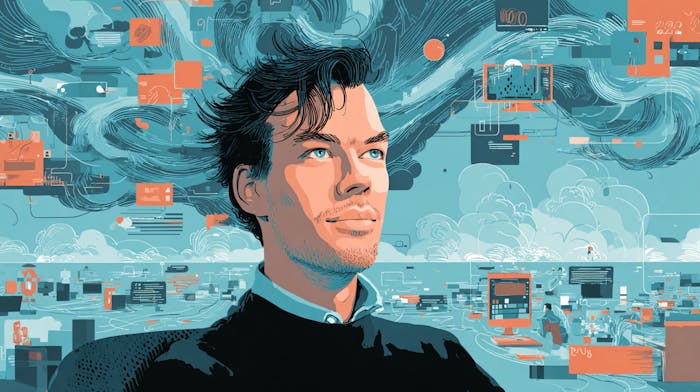
Dominic Zijlstra thought he was too late to surf the AI wave, but then realized that the people he was following on X were just really early. So he built Adaptify. And exactly two years later, he's bringing in $2M ARR.
Here's Dominic on how he did it. 👇
AI FOMO
I'm Dominic. I'm Dutch, but the Netherlands always felt too small for me, so I studied engineering physics in Germany and Brazil, and later worked in London as a space engineer for Airbus and as a data analyst in a fintech startup. Around that time, I met my wife, who is Chinese.
As I'd always loved language learning, I tried to learn Mandarin but hit a roadblock until I found an obscure method using mnemonic techniques that finally worked to learn those weird characters! I turned this method into a product (Traverse), which was my first SaaS project that made enough money to quit my job during Covid.
Then, in early 2023, as I interacted more with ChatGPT, I turned from an AI skeptic into an AI enthusiast. Like many founders at that time, I caught AI FOMO — that fear of missing out on the AI revolution and the strong conviction that AI would change our ways of doing business for good.
So, together with a friend, we started exploring making AI products. After a few months, that turned into Adaptify, an AI SaaS that completely automates SEO delivery and reporting for agencies, and has grown from 0 to 2M ARR in less than two years.
Create a Free Account
To read the rest of this article, you'll need to subscribe to Indie Hackers.
The best part is: subscribing is free!
Indie Hacker members get expanded access to more of our content, including articles and our database of ideas.
You'll also get access to the community, including the ability to talk to other indie hackers and create a profile for yourself.

Leave a Comment
Really inspiring story, Dominic — loved how you validated your idea with paid ads early on instead of guessing.
I also advise my early SaaS agency clients to run ads to validate their ideas. Additionally, it helps to use tools like Mixpanel (Google Analytics) and Hotjar (Microsoft Clarity) to see what this paid traffic does on your website and how it moves through the funnel steps.
Curious:
How much spending did you take before you felt confident that a new idea had real traction?
What exact paid media platform did you use for the validation?
What key metrics did you keep an eye on?
appreciate the paid ads however if bootstrapping/very tight on cash initially, any other recommendations?? thanks!
Hey there! In this case, I’d dedicate all my time to building partnerships—affiliates, referrals, influencers, and the like.
Awesome suggestions!
Yes I can second partnerships if you have tight initial cash, this ended up being the primary channel for my previous SaaS, Traverse
Yep we used Hotjar a lot as well early on. I think we spend around $1k to get our first customer on a $499/month plan, so we kept doubling down and seeing similar (and later increasingly better) numbers. The main thing we looked at is payback period, which is 2 months in the above case. We exclusively used Meta ads for validation
That was a great result, Dominic! Since you only needed to retain that customer for two months to break even, your LTV/CAC ratio was clearly in a good place. No wonder your company grew to this level. I’ve also noticed Meta ads tend to be more cost-effective than Google Ads.
Although he joined the AI wave later than others, he hit $2M in two years by solving real problems, delivering value rapidly, and remaining consistent.
I had a similar experience last year. I built a content tool using GPT, Google Sheets, and Firebase. I thought it was too simple. Then I saw others using the same setup to build real products. What made the difference wasn’t the tools. It was focus and knowing who the product is for. When Dominic shifted to agencies, that part really hit me. I was trying to build for everyone. Now I see why that never worked.
Absolutely wild how much of this resonated... I just had to say how refreshing and real your entire story is. From space engineering to data analysis, then teaching yourself async Python and building a successful AI SaaS... it’s deeply inspiring. So many people talk about chasing product-market fit like it’s some elusive target, but you built your way into it, and that’s honestly one of the coolest parts of your journey.
Loved your thoughts on value ladders, paid ads as a lie detector, and especially that bit about “wisdom work.” That’s where it’s all heading. Tech will handle the mechanics, but it’s the humans who still shape the meaning and strategy behind it.
Thanks for sharing this in such detail.
Glad it resonated so strongly with your Sierra!
This is fire 🔥 — from language learning to AI-first SEO, that’s one hell of a pivot path.
Quick question: how did you decide which features to automate first once you started gaining traction? Was it based on user feedback, intuition, or internal bottlenecks?
Also love the value ladder idea — feels like a smart way to grow LTV without forcing upgrades too early. Respect!
Good question! It was mostly user feedback, to which we were very open since we were not initially SEO experts ourselves. For our internal tooling and dashboards, definitely internal bottlenecks is also something that helped us prioritize
That makes a lot of sense! So basically listening closely to users became your edge. Curious — was there ever a feature users kept asking for that you were hesitant to build at first?
Incredible journey, Dominic!
Love how you turned AI FOMO into focused execution and real traction. The SEO automation space is crowded, but Adaptify's positioning around agencies and your value ladder strategy really stands out. Also, can’t agree more on using paid ads as a truth serum for validation brutal but effective.
We’re also building in the AI x marketing space at GudSho and your story is a great reminder that it’s never “too late” if you’re solving the right problem with clarity and speed.
Thanks for sharing this in such depth lots to take away for any AI-first team trying to scale!
Cheers Mate!!
Hitting $2M ARR in just two years, despite being "late to the AI party," shows that timing isn't everything—execution is. With the right niche, strategic positioning, and a deep understanding of user pain points, even late entrants can scale rapidly. It’s a testament to focusing on value, not hype, in the AI space.
Yep solving real business problems is key, that you're using AI to do so is secondary (but it does massively increase the space of business problems that can now be solved with software)
Great interview and very inspiring. I have a question for Dominic. For the Langchain flow, do you have a preferred LLM for each type of SEO task? Curious how you decide which model to use where.
Definitely! We use Claude for creative writing, and the OpenAI O3 thinking models for more logical tasks like turning qualitative + quantitive data into a keyword strategy. Recently also been switching over some tasks to Gemini flash and pro as they're cheaper and quality seems up to par now
Wildly impressive! Hitting $2M ARR in 2 years, especially in a crowded AI space, is no small feat.
Curious — what part of the product or messaging helped you stand out despite being late to the AI wave?
We’re building ZTH, an AI pitch deck engine for founders, and constantly wrestling with differentiation too — so would love to learn from your experience!
Messaging definitely took us quite a while to get right! I think the key insight was when we realized we're an automated SEO tool for agencies, rather than an SEO writer or even a general AI SEO tool. This also helped us become clear on our roadmap and add stuff like whitelabel reporting etc which is now one of our most-loved features
What a great journey, thanks for sharing.
It is great journey thanks for sharing
Very welcome!
Wow what a journey, It proves you are never late for anything if you build the right stuff.
This!
Definitely, and especially if you hang out with the right crowd you're never late
Dominic, the "late to the AI party" framing is worth unpacking. You weren't actually late — you were looking at the people who were earliest (Twitter/X power users in the AI space) and using them as your reference point, which made you feel behind. That's a perception problem, not a timing problem. The real timing question is whether your customers — SEO agencies — were ready for AI automation of delivery and reporting in early 2023. It sounds like the answer was yes. The Traverse → Adaptify path is also interesting: you already knew how to build SaaS that helps people learn systematically, which probably informed how you built something that systematizes SEO delivery. $2M ARR in under two years for an AI-native agency tool is exceptional, especially given the competitive noise in that space. What was the first thing agencies told you Adaptify did that nothing else could?
late to the ai party but still hitting 2m arr tells me they picked the right niche + channel, not just hype.
id love to know what the initial wedge was and what they refused to build (saying no is usually the secret).
The "paid ads as validation" approach is criminally underrated.
Most founders spend months building, then wonder why nobody converts. You flipped it: spent $1k, got a $499/mo customer, saw 2-month payback, and doubled down. That's real validation, not vanity metrics.
What resonates most:
1. "You're never as late as you think"
The Twitter AI bubble represents maybe 1% of the market. Everyone else is still figuring this out. This killed my FOMO completely.
2. Learning which feedback to ignore
This is the hardest skill. Every user has opinions, but only some have the right ones. How did you develop this filter? Was it based on who was paying most, who stayed longest, or something else?
3. Value Ladder = LTV expansion
Entry-level "Pitch Mode" to get them in, then they naturally upgrade as confidence builds. Genius. Much better than trying to sell the expensive tier first.
Quick question: When you were validating with Meta ads early on, what creative/message angle actually moved the needle? Problem-focused ("SEO is eating your time"), solution-focused ("automate SEO delivery"), or results-focused ("agencies scale faster")?
Currently building in the product analytics space, and your "test with real money, not friendly feedback" lesson is exactly what I needed to hear.
$2M ARR in 2 years with paid ads as primary channel is seriously impressive. Congrats 🚀
Amazing achievement! Proves that timing isn't everything—execution, focus, and solving real problems can let you catch up and even surpass early movers. Congrats on the milestone and thanks for sharing your journey—it’s a great reminder that persistence and smart strategy matter most.
Your story highlights how self-awareness and adaptability are real leverage multipliers in the AI era. At Sentino, we’re exploring the psychology behind that same adaptability — your journey is a perfect example in action.
This story really hits home — I’ve also built an AI-based SEO + GEO automation tool, and seeing how Adaptify evolved through pivots is really inspiring. Love how you focused on agencies and built real traction from paid validation. Your journey gives a lot of clarity for solo founders like me who are scaling step by step
Very often, people validate theirs idea to late...
It’s encouraging to see that being late to AI doesn’t mean you’re locked out. What stood out for me was your section on building RAG before it even had a name. That’s a great example of solving problems first and worrying about labels later. The way you turned async Python, LangChain, and vector DBs into something practical for SEO shows that consistency and execution matter way more than timing. Makes me think being late often gives you the perspective to build something more resilient.
Super insightful breakdown — the three-layer funnel really clicked for me. I’ve been struggling to prioritize where to put my limited energy as a solo builder, and this framework gives me a clear way to think about awareness, consideration, and conversion. It’s also encouraging to see success even when “late to the AI party.” Great reminder that execution and clarity matter more than timing. Thanks for sharing this!
Very inspiring, loved the Automate everything part.
That's something I'd advise every founder to take note of!
The best part? You didn’t just ride the AI hype — you built something boring, useful, and focused. That’s what actually scales. Respect.
came late on Party doesn't matter theres still invovations that are pending
This was an inspiring read — especially the reminder that being “late” doesn't matter if you execute well and really know your audience.
I’m in the early stages with an AI tool for brand name generation, and it’s reassuring to see stories like this. There’s still so much room to innovate, even in crowded markets.
Curious — how much of your early traction came from organic vs partnerships or paid?
So SEO is still alive in this AI age?
He achieved $2M ARR in two years by identifying niche AI needs, focusing on execution, customer value, and consistent marketing—proving success isn’t about being first, but being effective.
He achieved $2M ARR in two years by identifying niche AI needs, focusing on execution, customer value, and consistent marketing—proving success isn’t about being first, but being effective.
Even though he entered the AI space later than his competitors, James Fleischmann reached $2M ARR in just two years by identifying niche opportunities, executing quickly, and delivering real value to customers.
What an incredible story! Proves that solving a real problem with great execution beats being first to market every time. Inspiring stuff, Dominic!
What a journey — love how Dominic turned “being late” into a massive advantage. So many gems here: validate with paid ads, pivot fast, and automate everything. Proof that execution > timing in the AI game. Inspiring stuff
Love the hustle, Dominic – $2M ARR in two years proves smart pivots and real validation (paid ads FTW!) are game‑changers. 🚀
Watching products like Chatbase, SiteGPT, I was also thinking I am late to the party, but now I am feeling it's not late and I just need to solve a real world problem. Thank you for sharing the post btw :)
Impressive how Adaptify scaled to $2M ARR by automating SEO delivery and reporting, especially by focusing on agencies.
What I’m noticing, though, is a shift in how people search — it’s not just Google anymore. More decision-makers ask ChatGPT, Gemini, or Perplexity directly for recommendations. For agencies, that could mean a huge visibility gap if they’re not appearing in AI-driven responses.
Dominic, curious — have you seen AI assistants becoming a source of traffic or leads yet? Do you think agencies will soon need to optimize not just for Google but for AI visibility as well?
Incredible journey, Dominic. Love how you leaned into paid ads for fast validation and pivoted based on real traction, not theory. The async + RAG build story is awesome. It shows what focused learning under pressure can do. Big respect for scaling to $2M ARR bootstrapped.
Super insightful journey, Dominic.
Curious for other builders here:
Have you tested your niche with paid ads before building like Dominic did?
Are you using AI to automate your internal ops or just your product?
When did you know it was time to niche down hard vs. explore broadly?
How are you balancing speed of iteration with maintaining product quality?
What’s your biggest constraint forcing focus right now, and how are you using it as an advantage?
Your story is a reminder that AI + focus + fast pivots = unfair edge if you stay consistent. Thanks for sharing the behind-the-scenes!
This post is nothing short of inspirational! Thank you for sharing, and congratulations!
Absolutely loved the meta-layer of your journey — using paid ads not just for traction but as a truth serum for product validation is such a powerful lens.
Also impressed by how you kept things lean and focused in a space as noisy as AI. Would love to hear more on how you filtered feedback — how did you know which user requests were worth building into the core, and which ones to let go?
$2M ARR in two years is wild, especially considering how crowded the AI space is. Would love to know what made your product stand out from the noise — timing, distribution, or something else?
Super impressive! Just goes to show that being “late” doesn’t mean you’ve missed the opportunity — execution and focus still matter more than timing. Loved the part about carving out a niche even in a crowded space. Really inspiring for anyone feeling behind in fast-moving industries like AI. Thanks for sharing the journey!
That's truly an inspiring story. I'm also currently building an AI bot using a local language model (though it's still smaller), and this article really motivated me to explore the AI world further.
Nicee idea
Love the practical tips for idea validation with paid ads and how you narrowed your ideal customer profile to agencies!
thanks for you sharing!
Really resonated with your take on 'wisdom work' - stepping out of ops to focus on the main strategy. As you aim to remove yourself from the day-to-day, what were the first responsibilities you delegated? And how did you prioritize that transition without growth slowing down?
wow thats great
The success of James Fleischmann in AI has been attributed to his execution, niche targeting, and delivering real value - proving that it is never too late to succeed.
Such an inspiring journey...
Lot of wisdom here -- thanks for sharing the details!
¡Qué recorrido tan interesante, Dominic!
Pasar de la ingeniería aeroespacial al SaaS educativo y luego al SEO con IA… impresionante. Me identifiqué mucho con lo que contaste sobre el “AI FOMO” en 2023. Yo también pasé de la curiosidad a una especie de obsesión sana por cómo la IA puede resolver problemas reales.
Estoy construyendo un pequeño proyecto llamado MyBrainyBot, enfocado en ayudar a estudiantes a aprender más rápido con IA. Leer sobre casos como el tuyo y cómo han escalado en tan poco tiempo realmente motiva.
¡Felicidades por el crecimiento de Adaptify! Muy inspirador ver ese 0 → 2M ARR en menos de dos años.
Super inspiring! Just shows you don’t have to be first to win — execution and focus matter way more than timing.
This was a fascinating and inspiring read—your journey through experimentation, automation, and niche discovery truly resonates. It’s impressive how AI-driven solutions are transforming entire workflows for agencies. A similar transformation is happening in the public sector too. For instance, in Ghana—GoGPayslip—has revolutionized how government employees access their payslips and manage salary records. Like your SEO automation, GoGPayslip simplifies processes, reduces friction, and empowers users with timely, accessible data. It's exciting to see how automation is reshaping both the private and public sectors around the world.
Super inspiring, especially the reminder that you don’t need to be first, you just need to be loud, consistent, and valuable. The AI wave isn’t over; it’s just maturing into niches.
I’m currently building an AI-powered satirical character (Angry John, imagine a foul-mouthed drill sergeant with PTSD answering dumb internet questions 😅). It's early, but watching founders scale past $1M ARR by leaning into voice + character + niche gives me real hope.
Question: What channel gave you the biggest unexpected growth spike early on? Organic, community, cold outreach?
It was paid ads from the start, and there wasn't really any spike but more gradual consistent growth (of course not without a setback now and then)
Hello! When talking about paid ads, did you have the application/platform built beforehand, or how exactly did you 'validate' the users? Did you have a dummy page for them to register early access to the platform that you have started building after?
What I am trying to ask is: what exactly did you market during the validation phase, how/what did you showcase to future potential clients?
I would be really, really grateful if you could detail a bit the validation stage beside the fact that you have used paid ads by Meta - I am more curious in how you have used them.
Wow, hitting $2M ARR in just two years and joining the AI game late is seriously impressive! Shows that timing isn’t everything—execution and persistence really make the difference. Would love to learn more about how you accelerated growth so fast!
Really great and inspiring story. Particularly impressed with the hustle and grind approach. Thanks for sharing.
Turning FOMO into form: $2M ARR shows execution > envy.
Awesome to see how you embraced being late to the party”—your pivot from AI FOMO into a focused, agency‑centric SEO stack reallystood out. Turning ads into real validation (and doubling down fast) is a leson I’m bookmarking. And your point on teamwork (“go far, go together”) feels especially true these days. Really inspiring journey—cheers to the $2M ARR milestone! Goals as a startup founder myself
Proof that execution > timing. Being “late” doesn’t matter if you build real value, find a niche, and stay consistent. Super inspiring for anyone feeling behind.
Awesome! The SEO market is huge, so sky's the limit.
Really inspiring story
Super inspiring! I’m currently building a lightweight insight dashboard for indie makers myself — it’s awesome to see others succeeding in this space.
Curious: did you focus more on SEO or communities early on for traction?
Neither, really just paid ads and we've kept doing that ever since. In many ways we haven't invested as much in our own SEO as we could given our expertise, but that's just because the business value hasn't been there until now
Appreciate the honesty — that makes sense.
I’m building something similar but trying a different path: instead of dashboards, it’s just one insight per day, sent by email.
Curious how you think about the tradeoff between showing everything vs surfacing only what matters?
Such an insightful journey, the point of choosing the feedback from the right customer, is something that made me think more when developing a product.
Kudos to you @Dominic.
I want to connect and explore potential ways we can collaborate.
Sent you a connection request on LinkedIn!!